Preventive or Preventative: Which Is Correct and When Should You Use Each Word?

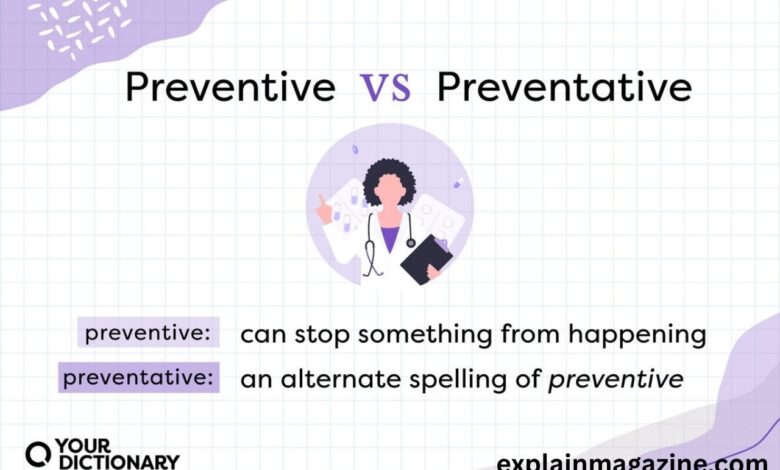
Many English words create confusion because two versions appear to be correct at the same time. One of the most common examples is the debate between preventive and preventative. Students, healthcare professionals, business owners, writers, and even native English speakers often wonder which word is correct. Questions such as “Is it preventive or preventative care?”, “Which is correct for maintenance?”, and “What does the Oxford Dictionary recommend?” are searched thousands of times every year.
The interesting answer is that both words are accepted in modern English. However, there are important differences in how frequently they are used and which version is preferred in professional writing. Understanding these distinctions can help improve your writing, especially in healthcare, medicine, engineering, business, and academic communication.
This guide explores the history, meaning, usage, and professional preferences surrounding preventive and preventative while answering the most commonly searched questions about these terms. Both words mean essentially the same thing, but one has become the preferred choice in most professional contexts.
Quick Facts Table
| Topic | Details |
|---|---|
| Preferred Word | Preventive |
| Alternative Word | Preventative |
| Meaning | Intended to stop a problem before it occurs |
| Part of Speech | Adjective and Noun |
| Accepted by Dictionaries | Yes, both forms |
| More Common Usage | Preventive |
| Healthcare Preference | Preventive Care |
| Medical Preference | Preventive Medicine |
| Maintenance Industry Preference | Preventive Maintenance |
| Oxford Dictionary Position | Lists both forms |
| Formal Writing Recommendation | Preventive |
Understanding the Meaning of Preventive
The word preventive refers to something intended to stop an unwanted event, illness, problem, or difficulty before it happens. It is commonly used in medicine, healthcare, engineering, safety planning, education, and business management.
Examples include:
- Preventive care
- Preventive medicine
- Preventive maintenance
- Preventive measures
- Preventive action
The word is derived from the verb “prevent,” meaning to stop something from occurring. Historical language records show that preventive has been in regular English use since the early seventeenth century and has consistently been the more widely used form.
Understanding the Meaning of Preventative
The word preventative has the same meaning as preventive. It also describes actions, treatments, strategies, or measures designed to stop something negative from happening.
Examples include:
- Preventative care
- Preventative medicine
- Preventative maintenance
- Preventative measures
Although some people assume preventative is incorrect, major dictionaries recognize it as a valid English word. It has existed for centuries and continues to be widely used throughout English-speaking countries.
Is It Preventive or Preventative?
This is by far the most frequently asked question.
The answer is simple: both preventive and preventative are correct. Language authorities including Merriam-Webster, Oxford, and Dictionary.com recognize both forms as acceptable English words. They share the same meaning and are generally interchangeable in everyday communication.
However, preventive is considerably more common in formal writing, government publications, healthcare organizations, and academic documents. Because of its broader acceptance, many style guides recommend using preventive whenever possible.
Which Is Correct: Preventive or Preventative?
Technically, both words are correct.
If your only concern is grammar, you can use either form. However, if you are writing professionally or academically, preventive is generally considered the preferred option because it is shorter, more common, and widely accepted across industries.
Many organizations choose preventive simply because it aligns with modern style recommendations and appears more frequently in professional publications.
Preventive or Preventative Care
The healthcare field provides one of the most common examples of this debate.
Preventive care refers to medical services designed to prevent illness, detect diseases early, and improve long-term health outcomes.
Examples include:
- Annual health checkups
- Vaccinations
- Blood pressure screenings
- Cancer screenings
- Cholesterol testing
- Wellness examinations
Although preventative care is understandable and acceptable, preventive care is the phrase most commonly used by healthcare providers, insurance companies, and public health organizations.
Is It Preventive or Preventative Care?
Both are correct.
However, preventive care is overwhelmingly preferred in medical literature, healthcare policy, insurance documents, and hospital communications. If you are writing healthcare content, preventive care is generally the best choice.
Preventive or Preventative Maintenance
The maintenance industry also strongly favors preventive.
Preventive maintenance refers to scheduled inspections, servicing, repairs, and upkeep intended to reduce the likelihood of equipment failure.
Examples include:
- Vehicle servicing
- HVAC inspections
- Machinery lubrication
- Software updates
- Equipment calibration
The goal is to address small issues before they become expensive problems.
Is It Preventive or Preventative Maintenance?
Both phrases are acceptable.
However, preventive maintenance is the recognized industry standard in engineering, manufacturing, transportation, and facilities management. Most technical manuals and maintenance programs use preventive maintenance rather than preventative maintenance.
Preventive or Preventative Medicine
Medicine is another area where the preference is very clear.
Preventive medicine focuses on preventing diseases rather than treating them after they develop. This branch of medicine emphasizes health promotion, vaccinations, screenings, and lifestyle improvements.
Examples include:
- Immunization programs
- Public health initiatives
- Nutritional counseling
- Disease screening
- Smoking prevention programs
Medical schools, journals, and healthcare organizations overwhelmingly use the phrase preventive medicine.
Is It Preventive or Preventative Medicine?
Although both forms exist, preventive medicine is the professional and academic standard.
Research databases contain significantly more references to preventive medicine than preventative medicine, demonstrating its dominance within the medical field.
Preventive or Preventative Measures
When discussing safety, risk reduction, health protection, or security planning, both expressions are commonly used.
Examples of preventive measures include:
- Wearing safety equipment
- Installing alarms
- Practicing proper hygiene
- Conducting safety inspections
- Following emergency procedures
In everyday writing, preventive measures and preventative measures carry identical meanings.
Preventive or Preventative Healthcare
Healthcare organizations generally prefer preventive healthcare because it aligns with established medical terminology.
Preventive healthcare focuses on avoiding illness through early intervention and healthy lifestyle practices rather than treating diseases after they develop.
This includes:
- Vaccinations
- Wellness visits
- Health screenings
- Preventive counseling
- Routine examinations
While preventative healthcare is still accepted, preventive healthcare remains the standard phrase used by most healthcare institutions.
What Does Oxford Dictionary Say?
Oxford dictionaries recognize both preventive and preventative.
Oxford lists preventive as the primary form while acknowledging preventative as an accepted alternative spelling. This position reflects the view of many modern language authorities: both words are correct, but preventive is preferred.
Why Is Preventive More Popular?
Several factors explain why preventive has become more common.
First, it appeared slightly earlier in English history. Second, many editors and style guides favor shorter forms when two words mean the same thing. Third, healthcare, government, and academic institutions have standardized preventive in official documents.
As a result, preventive appears more frequently in books, research papers, government publications, and professional communications.
When Should You Use Preventive?
Use preventive when:
- Writing academic papers
- Creating healthcare content
- Preparing business documents
- Following professional style guides
- Writing technical manuals
- Publishing formal reports
Because it is the preferred professional form, preventive often sounds more polished and authoritative.
When Should You Use Preventative?
You can use preventative when:
- Writing informal content
- Following organizational preferences
- Matching existing terminology
- Maintaining consistency in a document
Preventative remains a legitimate English word and should never be considered incorrect.
Conclusion
Read More: Jordan Elsass: Age, Superman & Lois Exit, Movies, TV Shows, and His Journey in Hollywood
The debate over preventive or preventative is ultimately a matter of preference rather than correctness. Both words are accepted by major dictionaries and share the same meaning. However, preventive has become the dominant form in healthcare, medicine, engineering, business, and academic writing because it is shorter, more widely used, and recommended by many style authorities.
Whether you are discussing preventive care, preventive maintenance, preventive medicine, or preventive healthcare, using preventive will generally align with modern professional standards. Nevertheless, preventative remains an acceptable alternative that continues to appear in everyday English. At ExplainMagazine, we believe understanding these language distinctions helps writers communicate more effectively and confidently in both professional and personal settings.