Do Bad Eggs Sink or Float? Understanding the Egg Float Test and What It Really Means

Eggs are one of the most commonly used foods in kitchens around the world. Whether you’re making breakfast, baking a cake, or preparing a family meal, eggs are often an essential ingredient. However, many people eventually find themselves staring at an old carton in the refrigerator and wondering, “Do bad eggs sink or float?”
The egg float test has become one of the most popular methods for checking egg freshness. Many people believe that if an egg floats, it is automatically bad, while a sinking egg is always safe to eat. Although there is some truth to this idea, the reality is more complex.
Understanding how and why eggs sink or float can help you make better decisions about food safety and reduce unnecessary food waste. The float test is a useful indicator of an egg’s age, but it should not be the only method used to determine whether an egg is safe to consume. According to food safety guidance, a floating egg is generally older because its air cell has enlarged over time, but it may still be safe if it has no unusual odor or appearance.
Quick Bio Table
| Topic | Details |
|---|---|
| Subject | Egg Float Test |
| Purpose | Determine Egg Freshness |
| Fresh Egg Result | Sinks and lies flat |
| Older Egg Result | Sinks but stands upright |
| Very Old Egg Result | Floats |
| Water Used | Cold Water |
| Test Duration | Less Than One Minute |
| Safety Indicator | Not 100% Reliable |
| Best Confirmation Method | Crack Open and Smell |
| Common Question | Do Bad Eggs Sink or Float? |
Do Bad Eggs Sink or Float?
The short answer is that bad eggs are more likely to float, but floating does not automatically mean an egg is spoiled.
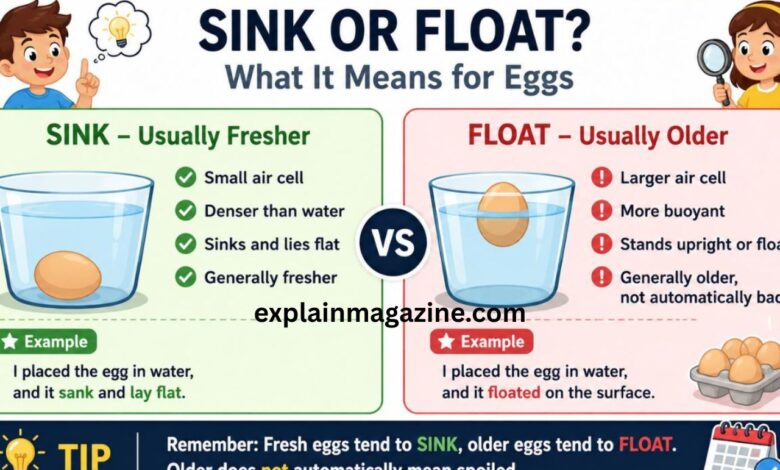
As eggs age, moisture and carbon dioxide slowly escape through tiny pores in the shell. At the same time, air enters the egg and enlarges the air pocket inside. As this air cell grows, the egg becomes more buoyant and begins to rise in water. Eventually, an old egg may float.
Because of this process, people often assume that all floating eggs are rotten. In reality, the float test mainly measures age and freshness rather than food safety. A floating egg is usually older, but it is not automatically unsafe to eat.
How Does the Egg Float Test Work?
The egg float test is simple and requires only a bowl of water.
Steps
- Fill a bowl or glass with cold water.
- Gently place the egg into the water.
- Observe how it behaves.
Possible results include:
Egg Sinks and Lies Flat
This indicates a very fresh egg.
Fresh eggs contain very little air, making them denser than water. As a result, they sink completely and rest horizontally on the bottom.
Egg Sinks but Stands Upright
This indicates an older egg.
The egg is still generally usable, but it should be consumed soon. The larger air pocket causes one end to rise while the egg remains on the bottom.
Egg Floats
This indicates a much older egg.
The enlarged air cell provides enough buoyancy for the egg to rise toward the surface. The egg should be inspected carefully before use.
Do Bad Eggs Sink or Float in Water?
Many people specifically ask whether bad eggs sink or float in water.
In most cases:
- Fresh eggs sink.
- Older eggs may stand upright.
- Very old eggs tend to float.
However, floating does not prove that an egg is spoiled. Food safety experts recommend cracking the egg into a separate bowl and checking its smell and appearance before deciding whether to use it. A spoiled egg typically produces a strong unpleasant odor once opened.
Do Bad Eggs Sink or Float in Cold Water?
Yes, the test is normally performed using cold water.
Cold water helps produce the most reliable results because it allows the egg’s density and buoyancy to be observed accurately. Most food safety recommendations specifically describe using cold tap water for the test.
When placed in cold water:
- Fresh eggs sink immediately.
- Aging eggs begin tilting upward.
- Old eggs may float.
This behavior occurs because of changes inside the egg over time rather than because of the water itself.
Why Do Eggs Float as They Age?
The science behind floating eggs is relatively simple.
Eggshells contain thousands of microscopic pores. These pores allow moisture and gases to slowly move through the shell.
Over time:
- Water evaporates from the egg.
- Carbon dioxide escapes.
- Air enters the shell.
- The internal air cell expands.
As the air pocket grows larger, the egg becomes less dense relative to its volume. Eventually, the egg becomes buoyant enough to float.
This process happens naturally even when eggs are refrigerated.
Does Floating Mean an Egg Is Rotten?
Not necessarily.
One of the biggest misconceptions about the egg float test is that a floating egg is always rotten.
Food safety authorities explain that floating indicates an enlarged air cell and lower quality due to age, but the egg may still be safe. The only reliable way to identify spoilage is to crack the egg open and inspect it.
A spoiled egg often has:
- A strong sulfur smell
- Discoloration
- Unusual texture
- Mold or slime on the shell
If any of these signs are present, the egg should be discarded immediately.
Better Ways to Tell if an Egg Is Bad
While the float test is useful, it should not be your only method.
Smell Test
The smell test is often considered the most reliable method.
A rotten egg produces a powerful sulfur-like odor that is difficult to miss. If the egg smells bad after cracking, throw it away immediately.
Visual Inspection
Look for signs such as:
- Pink egg whites
- Green discoloration
- Strange spots
- Excessive cloudiness
These can indicate spoilage.
Shake Test
Some people gently shake an egg near their ear.
A fresh egg produces little or no sound. If the contents slosh around noticeably, the egg may be old.
How Long Do Eggs Stay Fresh?
When stored properly in a refrigerator, eggs often remain usable for several weeks.
Proper storage practices include:
- Keeping eggs refrigerated
- Leaving them in their original carton
- Avoiding temperature fluctuations
- Storing them away from the refrigerator door
Refrigeration slows the aging process and helps maintain freshness longer.
Common Myths About Floating Eggs
Myth 1: Every Floating Egg Is Rotten
False. Floating usually means the egg is older, not necessarily spoiled.
Myth 2: Every Sinking Egg Is Safe
False. While sinking is a good sign of freshness, it does not guarantee the egg is free from contamination.
Myth 3: The Float Test Is Perfect
False. The test measures age and air-cell size, not bacterial contamination or food safety.
When Should You Throw an Egg Away?
Discard the egg if:
- It smells unpleasant.
- It has visible mold.
- The shell is slimy.
- The contents look unusual.
- You are unsure of its condition after testing.
Food safety should always take priority over avoiding waste.
Conclusion
Read More: Towards or Toward: Which Is Correct and When Should You Use Each One?
If you have ever wondered, “Do bad eggs sink or float?”, the answer is that bad or very old eggs are more likely to float because their internal air cell grows larger over time. However, floating alone does not prove an egg is spoiled. The float test is best viewed as a freshness test rather than a definitive safety test. Fresh eggs usually sink and lie flat, older eggs may stand upright, and very old eggs often float. To determine whether an egg is truly bad, always check its smell, appearance, and overall condition after cracking it open. At ExplainMagazine, we believe understanding simple kitchen science like the egg float test helps readers make safer and more informed decisions in everyday life.