Smelt or Smelled: Which Is Correct? Difference, Meaning, and Usage Explained

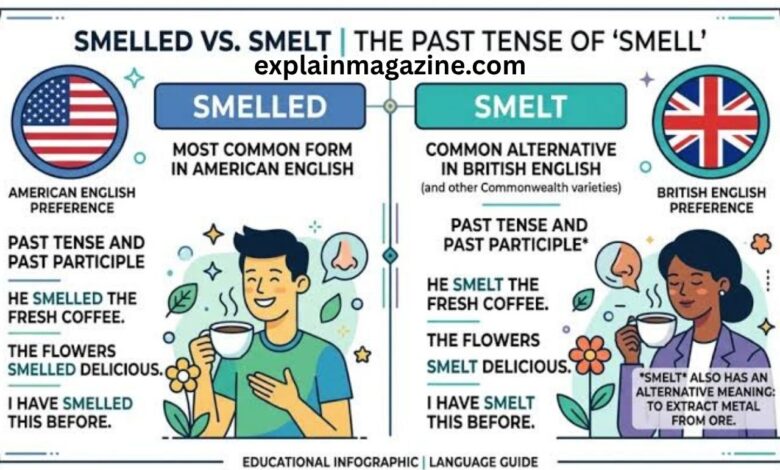
The words smelt and smelled often confuse English speakers because they are both forms of the verb smell. If you have ever wondered, “Is it smelt or smelled?”, “Which is correct: I smelt or I smelled?”, or “Do you say smelt or smelled?”, the good news is that both forms can be correct. The main difference is not meaning but regional usage. Oxford lists smelled as the past simple and past participle and identifies smelt as an additional British English form. Cambridge likewise gives smelled with smelt as a UK alternative.
Quick Grammar Table
| Question | Correct Answer |
|---|---|
| Present tense | Smell |
| Third-person present | Smells |
| Past tense | Smelled or smelt |
| Past participle | Smelled or smelt |
| American English | Smelled is standard |
| British English | Smelled and smelt are both used |
| Australian English | Both forms are encountered |
| Meaning of both forms | The same when they mean the past of “smell” |
| Is “smelt” a real word? | Yes |
| Is “smelled” a real word? | Yes |
Is It Smelt or Smelled?
The answer is both.
The verb smell has two accepted past forms:
smell → smelled
smell → smelt
For example, you can say:
“I smelled smoke coming from the kitchen.”
or:
“I smelt smoke coming from the kitchen.”
Both sentences mean that the speaker detected the smell of smoke in the past. There is no difference in the basic meaning of the two forms.
The choice usually depends on the variety of English being used. In American English, smelled is the normal form. In British English, both smelled and smelt are established forms.
Smelt or Smelled Difference
The most important difference between smelt and smelled is regional preference rather than meaning.
In American English, writers and speakers normally use smelled. For example:
“I smelled something burning.”
In British English, smelt is very common:
“I smelt something burning.”
British English also permits smelled, so a British speaker can say:
“I smelled something burning.”
Both are grammatically acceptable in British English.
This means that smelt should not automatically be treated as an incorrect spelling. It is a legitimate form of smell, particularly associated with British English and other varieties influenced by it.
I Smelt or I Smelled?
Both “I smelt” and “I smelled” can be correct.
For example:
“I smelled fresh bread when I entered the bakery.”
“I smelt fresh bread when I entered the bakery.”
The meaning is the same.
If you are writing primarily for an American audience, “I smelled” will usually sound more natural. If you are writing in British English, “I smelt” is perfectly natural, although “I smelled” is also accepted.
The most important thing is to choose the form that matches the variety of English you are using.
Do You Say Smelt or Smelled?
There is no universal requirement to use only one form.
American English generally favors smelled, while British English uses both smelled and smelt. Collins similarly identifies smelled and smelt as the past and past-participle forms, noting that American English usually uses smelled while British English uses either form.
For everyday writing, consider your audience:
- Writing for Americans: smelled is the safest choice.
- Writing for British readers: smelt or smelled is acceptable.
- Writing for an international audience: smelled is widely recognizable.
- Writing in a consistent British style: smelt can fit naturally.
Smelt or Smelled in English
Both words belong to English grammar when they are being used as forms of the verb smell.
The base verb is:
smell
The present-tense examples are:
“I smell coffee.”
“She smells perfume.”
“The flowers smell wonderful.”
For the past, English allows:
“I smelled coffee.”
“I smelt coffee.”
Oxford specifically lists smelled as the past simple and past participle and gives smelt as a British English alternative.
Therefore, someone who writes “I smelt the flowers” is not making a grammatical error simply because another writer would use “I smelled the flowers.”
When to Use Smelt or Smelled
Use smelled when you want the regular form commonly used in American English.
Examples:
- “She smelled fresh coffee.”
- “The room smelled strange.”
- “I smelled smoke outside.”
- “He smelled the flowers.”
- “The food smelled delicious.”
Use smelt when writing in British English or when you naturally follow that variety of English.
Examples:
- “She smelt fresh coffee.”
- “The room smelt strange.”
- “I smelt smoke outside.”
- “He smelt the flowers.”
- “The food smelt delicious.”
There is no change in meaning between the two forms when they are used as past forms of smell.
Smelt or Smelled: Past Tense
Both smelled and smelt can be the simple past tense of smell.
Present:
“I smell smoke.”
Past:
“I smelled smoke.”
or:
“I smelt smoke.”
The same applies to third-person subjects:
“She smelled something unusual.”
“She smelt something unusual.”
Oxford gives examples using smelt in British English, including sentences describing a room that “smelt damp” and a person who “smelt of garlic.”
This makes smelt an important example of an English verb with both a regular and an irregular-looking past form.
Smelt or Smelled as a Past Participle
The difference also applies when smell is used with have, has, or had.
For example:
“I have smelled this perfume before.”
“I have smelt this perfume before.”
Both are possible.
Similarly:
“She had smelled the smoke before.”
“She had smelt the smoke before.”
The past participle is needed after have, has, and had. Oxford lists both smelled and British English smelt as past participles.
He Smelt or He Smelled?
Both forms are correct.
“He smelled something strange.”
“He smelt something strange.”
The choice again depends mainly on the variety of English.
For American English, he smelled is the normal choice.
For British English, he smelt is particularly familiar, although he smelled is also correct.
There is therefore no grammatical reason to say that one sentence is universally right and the other universally wrong.
I’ve Never Smelt or Smelled
Both versions work with the present perfect:
“I’ve never smelled anything like it.”
“I’ve never smelt anything like it.”
The first is especially natural in American English. The second is common in British English.
Other examples include:
“I’ve never smelled such a strong perfume.”
“I’ve never smelt such a strong perfume.”
“Have you ever smelled this flower?”
“Have you ever smelt this flower?”
Again, the meaning remains unchanged.
It Smelt or Smelled
Both “it smelt” and “it smelled” are correct when describing an odor in the past.
For example:
“The kitchen smelled wonderful.”
“The kitchen smelt wonderful.”
“The room smelled damp.”
“The room smelt damp.”
Oxford specifically uses examples such as “The room smelt damp” and “The house smelt of cedar wood and fresh polish” to illustrate the British form.
The important point is that smell can describe either detecting an odor or having a particular odor. Both past forms work in these constructions.
Have You Smelt or Smelled?
Both are grammatically correct:
“Have you smelled the flowers?”
“Have you smelt the flowers?”
The structure is present perfect:
have + smelled
or:
have + smelt
The same principle applies to has and had:
“Has she smelled the perfume?”
“Has she smelt the perfume?”
“Had they smelled the smoke?”
“Had they smelt the smoke?”
Oxford and Cambridge both recognize these forms.
Smelt or Smelled in the UK
In British English, both smelt and smelled are accepted.
However, smelt is a particularly established British form. This is why British books, newspapers, television programs, and everyday conversations may contain sentences such as:
“The food smelt delicious.”
“He smelt smoke.”
“The house smelt of fresh paint.”
At the same time, British speakers can use smelled. Therefore, it would be inaccurate to say that British English permits only smelt. Oxford explicitly lists both, identifying smelt as the British English alternative.
Smelt or Smelled in Australia
Australian English has strong historical connections with British English, so smelt is an established form in Australian usage, while smelled is also understood and used.
This means an Australian writer may naturally write:
“I smelt something burning.”
Another writer may prefer:
“I smelled something burning.”
Neither needs to be interpreted as a completely different verb when the intended meaning is detecting an odor.
For Australian writing, consistency is more important than trying to declare one form absolutely correct.
Is Smelt or Smelled Correct?
Both are correct, provided they are being used as past forms of the verb smell.
The distinction can be summarized as follows:
Smelled: Standard and strongly preferred in American English.
Smelt: Accepted in British English and common in British-style usage.
Smelled in British English: Also correct.
This is confirmed by major dictionary references. Cambridge lists smelled as the past tense and past participle and gives smelt as a UK alternative. Collins similarly identifies both forms.
Is Smelt Always the Past Tense of Smell?
No. This is an important detail because smelt has other meanings.
In addition to being a past form of smell, smelt can refer to a type of small fish.
There is also a separate verb to smelt, meaning to extract metal from ore through a process involving heating. Its past tense is smelted, not smelt.
For example:
“The factory smelted the ore.”
This is completely different from:
“The factory smelled of metal.”
Therefore, context matters whenever you encounter the word smelt.
Smelling: The -ing Form
When using the continuous form or gerund, neither smelt nor smelled is used.
The correct form is:
smelling
Examples include:
“I am smelling the flowers.”
“She was smelling the perfume.”
“Smelling fresh bread makes me hungry.”
The spelling remains smelling in both American and British English. The regional difference primarily concerns the past forms smelled and smelt.
Which Form Should You Use?
If you are unsure, the easiest approach is to identify your target audience.
For American English, use smelled:
“I smelled something strange.”
For British English, either is acceptable:
“I smelt something strange.”
“I smelled something strange.”
For a piece of writing that consistently follows British English conventions, smelt may sound more natural. For American-focused content, smelled is the safer choice.
Most importantly, do not treat smelt as a spelling mistake. It is a recognized English form of smell.
Smelt vs. Smelled Examples
| Sentence | Correct? | Notes |
|---|---|---|
| I smelled smoke. | Yes | Standard American English |
| I smelt smoke. | Yes | Common British form |
| He smelled the flowers. | Yes | Standard |
| He smelt the flowers. | Yes | British English |
| It smelled strange. | Yes | Standard |
| It smelt strange. | Yes | British English |
| I’ve smelled this before. | Yes | Past participle |
| I’ve smelt this before. | Yes | British alternative |
| She was smelling the perfume. | Yes | Correct -ing form |
| I smelted the flowers. | No | Incorrect for the verb smell |
Final Answer: Smelt or Smelled?
Read More: Cats or Dogs: Which Is Better, Smarter, Cleaner, and More Popular?
So, is it smelt or smelled? Both can be correct. The two forms have essentially the same meaning when they are used as the past tense or past participle of smell. The major difference is regional usage. Smelled is the standard form in American English, while British English accepts both smelled and smelt, with smelt being a familiar and established British form.
If you are writing for an American audience, smelled is usually the best choice. If you are writing in British English, smelt is perfectly acceptable, and smelled is also correct. Australian English can likewise use both forms. The most useful rule is simply to choose the form that fits your variety of English and use it consistently throughout your writing.
For readers of ExplainMagazine, the key takeaway is easy to remember: smell → smelled or smelt. When talking about the past, either form can describe detecting or having an odor; the choice mainly tells readers which variety of English you are following.