Viltnemnda: What Norway’s Wildlife Committee Is, What It Does, and How to Contact One

Viltnemnda is a real Norwegian word, not a name, a brand or a mystery term: it means “the wildlife committee” — a municipal committee in Norway that handles the local wildlife-management tasks a municipality is responsible for. The indefinite form is viltnemnd; viltnemnda, with the ending -a, is the definite form, “the committee.” As of October 2026, there is no single national viltnemnda: since 1993 each municipality has organised this work itself, so some places have an elected viltnemnd, while others use a different committee, a department, or a specialist group for fallen game.
At a Glance: Viltnemnda
What it is: Viltnemnda (Norwegian, definite form of viltnemnd) is a municipal wildlife committee in Norway — in English, “the wildlife board” or “the wildlife committee.” Word breakdown: Vilt = wild game / wild animals; nemnd = a board or committee; -a = “the.” Together: “the wildlife committee.” What it does: Local wildlife management for a municipality — hunting-area approvals and quotas for deer species, felling permits (for example for beaver), planning advice, and organisation of fallvilt work: animals injured, killed or found dead, including road casualties. What it is not: Not a national agency, not an animal-rescue charity, and not Norway’s predator board (the separate, regional rovviltnemnd). History in one line: State wildlife boards existed in Norwegian municipalities from 1952 to 1992; on 1 January 1993, local wildlife management was transferred to the municipalities, according to Store norske leksikon. Current law (as of October 2026): The Wildlife Resources Act, Viltressursloven, in force from 1 July 2026, has replaced the Wildlife Act of 1981, according to the Norwegian Government. If you hit a wild animal in Norway: Call the police on 02800 (112 in an emergency), mark the spot, keep away from a live injured animal, and report the collision even if the animal ran off — the police notify the municipality’s fallen-game personnel.
What Does “Viltnemnda” Mean in English?
The most accurate translation of viltnemnda is “the wildlife committee” or “the wildlife board.” It is a compound noun — two ordinary words joined into one precise term.
- Vilt means wild animals, especially wild game. Under the former Wildlife Act of 29 May 1981, vilt was legally defined as all wild land mammals and birds, amphibians and reptiles living free in Norway. In everyday use it covers species such as moose (elg), red deer (hjort), roe deer (rådyr), reindeer, beaver and game birds.
- Nemnd means a committee or board — a collegial body appointed to decide a defined type of case, from Old Norse nefnd, linked to nefna, “to name or appoint.”
- -a is the definite-article ending. En viltnemnd is “a wildlife committee”; viltnemnda is “the wildlife committee.” The keyword usually appears with the -a because Norwegian official documents and municipal regulations refer to the specific committee of a named municipality — for example, “Reglement for Viltnemnda” (Regulations for the Wildlife Committee) in Tromsø.
Store norske leksikon (SNL), Norway’s national encyclopedia, defines a viltnemnd as committees that deal with the part of wildlife management for which the municipality is responsible, also known as viltutvalg — “wildlife committees.” That municipal link is the key to the whole term: a viltnemnda has no existence separate from its municipality.
Is Viltnemnda the Same in Every Norwegian Municipality?
No — and this is where many English-language pages go wrong, claiming every municipality has one or that one is legally required everywhere. That is not what the authoritative sources say.
According to Store norske leksikon, there were state wildlife boards in all of Norway’s municipalities in the period 1952–1992, appointed by the municipal council. From 1 January 1993, responsibility for local wildlife management was transferred to the municipalities themselves, and since then there has been, in SNL’s words, a great variation in the models municipalities use for it.
In practice, three situations exist side by side in Norway as of October 2026:
- A separate, elected viltnemnd. Some municipalities kept the old model: a politically appointed committee dedicated to wildlife. Halden Municipality, for example, describes its vilt- og innlandsfiskenemnd (wildlife and inland fisheries committee) as a politically appointed board with overall responsibility for wildlife management in the municipality. Hvaler Municipality noted in a 2024 case document that it was one of relatively few municipalities still keeping a politically appointed viltnemnd.
- A differently named specialist group. Many municipalities organise the practical work — especially responding to injured and road-killed game — through a fallviltgruppe (fallen-game group) or a jegerkorps (hunter corps).
- An ordinary committee or the administration. Other municipalities folded the wildlife tasks into an existing committee or a municipal department, with no separate wildlife board at all.
So “viltnemnda” is best understood as the traditional, still-common name for a function — the municipality’s wildlife committee — rather than one uniform institution found identically in every municipality. If you need yours, you look up your own municipality, not a national register.
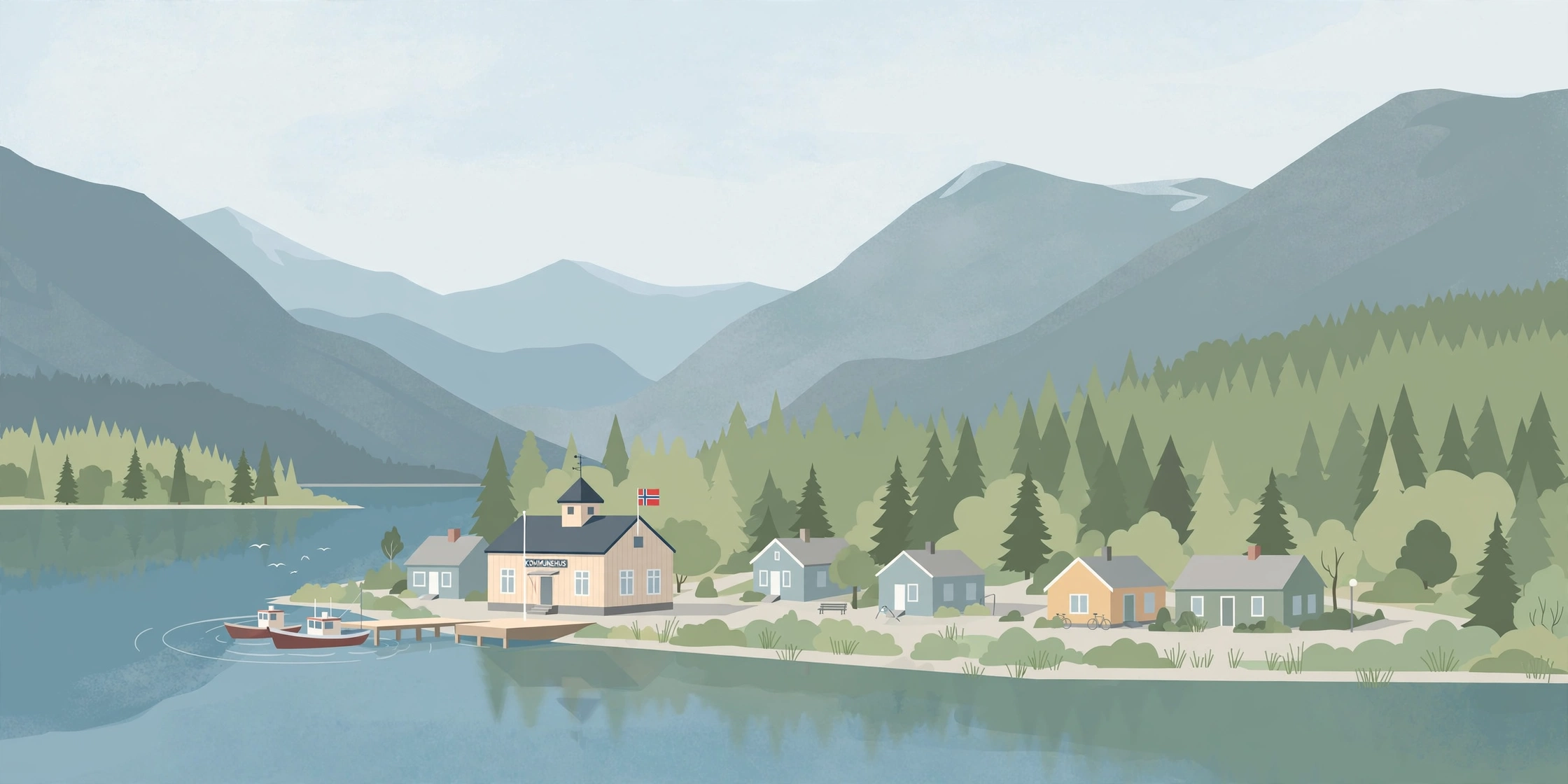
What Does a Viltnemnda Actually Do?
The exact mandate is set by each municipal council, so the task list varies, but the same core duties recur in municipal regulations across Norway — including Halden Municipality’s wildlife-management page, Tromsø’s viltnemnda regulations and Ibestad’s mandate:
Hunting administration and permits
- Approving hunting areas (vald) for deer species and setting or recommending the minimum area (minsteareal) required per animal.
- Issuing felling permits (fellingstillatelser) — Halden lists permits for deer species and beaver among its viltnemnd’s main tasks.
- Handling applications to fell animals that are causing damage, and giving statements when hunting regulations are revised.
Advice, planning and fallen game
- Acting as a consultation body (høringsinstans) in cases affecting wildlife and habitats — land-use plans, roads and developments in areas animals use — and working to have wildlife interests built into municipal planning, as Ibestad’s mandate puts it.
- Organising the response when game is hit by a vehicle, found injured, or found dead — the fallvilt work. In the Stange, Løten and Hamar area, for example, dedicated fallen-game groups follow up reports and begin searches (ettersøk) for wounded animals once the police pass the report on. Committees also help collect data on shot and fallen deer species.
Store norske leksikon also lists promoting game husbandry (viltstell) and hunting opportunities, and organising landowners’ small properties into joint management areas large enough for rational management, among the wildlife bodies’ original purposes.
Two limits are worth stating plainly, because English explainers often overstate them. First, a viltnemnda does not set Norway’s national hunting seasons: hunting and trapping times are set nationally by regulation; the municipal level works inside that framework. Second, it is not a round-the-clock animal-rescue service. Its field response runs mainly through the municipality’s contracted fallen-game and search personnel, activated — for traffic collisions — via the police.
Who Sits on a Viltnemnda, and Who Appoints It?
Where a municipality keeps a viltnemnd, the municipal council (kommunestyret) appoints it, typically for the four-year council term. Composition is local, but published regulations show the pattern: Tromsø’s viltnemnda has 7 members plus deputies — 5 political representatives and 2 landowner representatives proposed by landowner associations, with the council choosing the chair and deputy chair — while Porsanger’s draft statutes and Målselv’s regulations both describe 5-member committees elected by the council.
The logic is deliberate: wildlife management needs local, specialist knowledge — hunters, landowners and farmers who know the terrain and the populations — inside a politically accountable body. Decisions are taken collectively, and individual decisions can be appealed through the municipality’s appeals route, as Ibestad’s mandate describes.
What Is the Legal Basis for Viltnemnda?
As of October 2026, the legal picture has just changed, and older web pages (and older municipal regulations) still cite the previous act — so it helps to separate the two layers:
- The municipal layer. Wildlife management at local level belongs to the municipality. Under the former Wildlife Act (Viltloven, the Act of 29 May 1981), this was set out in section 4, with the municipal wildlife tasks in section 6; committees themselves are set up under the Local Government Act (kommuneloven) — the basis Tromsø’s and Porsanger’s viltnemnda regulations both cite. The Nature Diversity Act (Naturmangfoldloven, 2009) also frames how wildlife decisions must be knowledge-based.
- The new national layer. According to the Norwegian Government (Regjeringen.no), the Wildlife Resources Act (viltressursloven) was adopted by the Storting on 2 June 2025 and entered into force on 1 July 2026, replacing the Wildlife Act of 1981. The government states that the new act largely continues existing law while updating it for present-day challenges. Municipal responsibility continues under the new framework; local regulations that cite the 1981 act are being updated, which is why Lovdata records now show both citations side by side.
National agencies sit above the municipal level — the Norwegian Environment Agency (Miljødirektoratet) and the County Governor (Statsforvalteren) — but neither is “the viltnemnda,” and neither replaces the municipality as your first point of contact for local wildlife matters.
If you enjoy explainers that settle a confusing term, you may also like our guide to whether it is “weiner” or “wiener” — another word people search for because the spelling looks wrong.
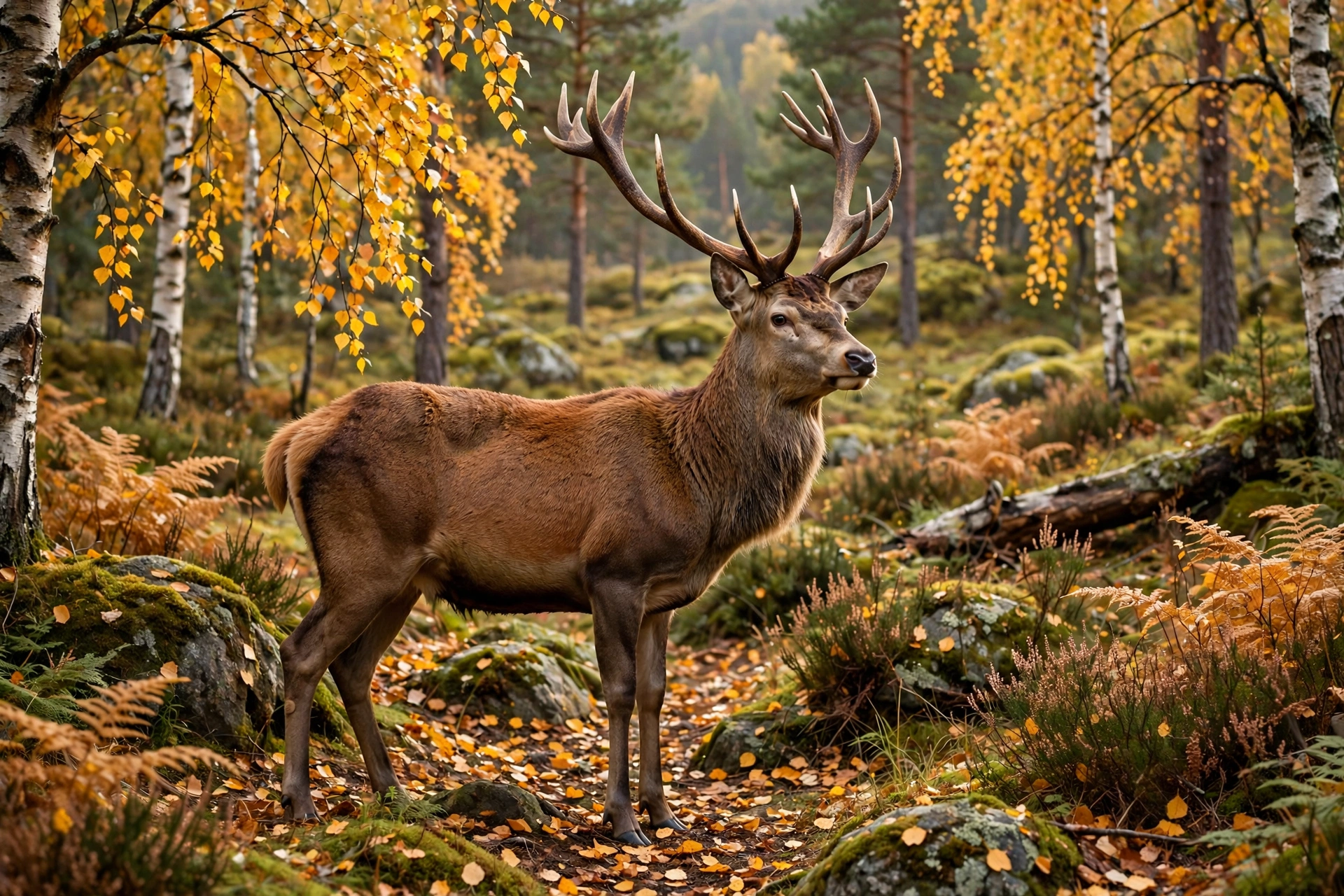
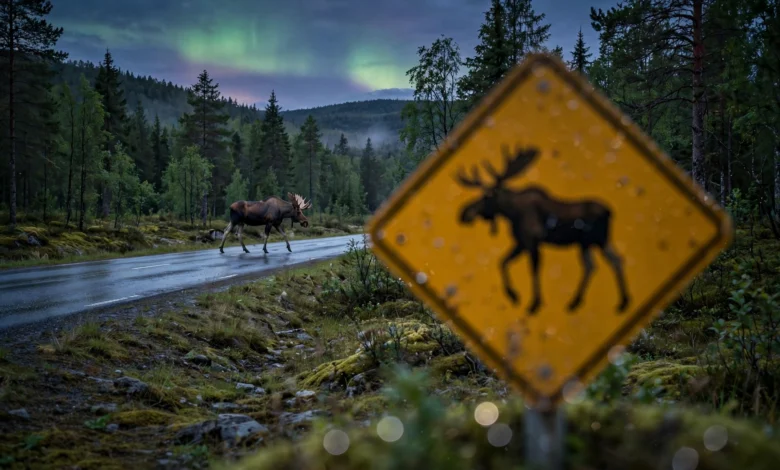
What Should You Do If You Hit a Moose or Deer in Norway?
This is the situation in which most people first meet the word. Løten Municipality’s guidance on wildlife collisions (updated September 2026) states the steps clearly:
- Call the police on 02800 and report the collision. In a genuine emergency, call 112 instead.
- Mark the exact spot where the animal was hit — with a wildlife band, a plastic bag or something visible — and save a screenshot of the location if you can.
- If the animal is alive, leave it alone and keep your distance. Never follow a wounded animal yourself: it makes the professional search harder.
- Report every collision involving contact between a vehicle and deer game — even if the animal escaped apparently unhurt. Failing to report is, in Løten’s words, a punishable offence.
Once you report, the police notify the municipality’s fallen-game personnel, who can turn out and start a search. Autumn and winter are peak season — Løten notes nearly 300 deer-vehicle collisions registered in 2025 in Stange, Løten and Hamar alone. Note that there is no national viltnemnda hotline: the call goes to the police; the follow-up belongs to the municipality where the collision happened.
Viltnemnda vs. Similar Norwegian Boards: What Is the Difference?
Norwegian wildlife administration uses several easily confused -nemnd names, working at different levels, on different animals, with different appointing authorities:
| Body | Level | Remit | Appointed by |
|---|---|---|---|
| Viltnemnd / viltnemnda | Municipal | The municipality’s wildlife management: hunting administration, permits, fallvilt follow-up | The municipal council (where the municipality keeps one) |
| Rovviltnemnd (predator board) | Regional (predator regions) | Large predators — wolf, bear, lynx, wolverine, golden eagle — including population targets and licensed-hunt quotas within its region | The Ministry of Climate and Environment, from nominations by county councils, according to the County Governor (Statsforvalteren) |
| Villreinnemnd (wild reindeer board) | Wild reindeer areas | Management and permit allocation for wild reindeer hunting areas | Separate area-based bodies for the wild reindeer ranges |
| Fallviltgruppe (fallen-game group) | Municipal | The practical field team for injured, dead and road-hit game — often instead of, or under, a viltnemnd | The municipality, using contracted personnel |
One concrete example: in September 2024, the Norwegian Environment Agency (Miljødirektoratet) reported that a golden eagle that had injured a young child in Orkland Municipality was put down by the local viltnemnd — a reminder that these committees deal with urgent local cases, not only paperwork.
How Can You Find or Contact Your Local Viltnemnda?
Because there is no single national viltnemnda, use the municipality-first method: go to your municipality’s official website and search for viltnemnd, viltforvaltning (wildlife management) or fallvilt. If no body is called viltnemnd, look for the fallviltgruppe or the environmental/agricultural office — the function exists even where the name does not. For a traffic collision or an animal in immediate danger, do not hunt for a committee’s email: call the police on 02800 (112 in an emergency) and let them activate the local team. For permits and hunting questions — a beaver dam flooding your land, deer damaging crops, approval of a hunting area — the municipality’s wildlife page or service desk is the correct first contact.
You can verify any claim about viltnemnda — including in this article — against the two anchor sources used here: the viltnemnd entry in Store norske leksikon for the definition and history, and the Norwegian Government’s notice that Viltressursloven entered into force on 1 July 2026 for the current legal position as of October 2026.
Frequently Asked Questions About Viltnemnda
What does viltnemnda mean in English?
Viltnemnda means “the wildlife committee” or “the wildlife board.” It is Norwegian: vilt (wild game), nemnd (committee/board) and the definite ending -a (“the”). Store norske leksikon defines a viltnemnd as a committee that handles the part of wildlife management for which a Norwegian municipality is responsible.
Does every municipality in Norway have a viltnemnda?
No. State wildlife boards existed in all municipalities from 1952 to 1992, but local wildlife management was transferred to the municipalities on 1 January 1993, according to Store norske leksikon. Since then each municipality has chosen its own model — an elected viltnemnd, a fallen-game group, another committee, or the administration.
What do I do if I hit a moose or deer in Norway?
Call the police on 02800 (112 in an emergency), mark the exact spot, keep away from a live injured animal, and report the collision even if the animal ran off. Løten Municipality’s guidance states that all deer-game collisions involving contact must be reported, failing to report is punishable, and the police then notify the fallen-game personnel.
Is viltnemnda a national agency or an animal-rescue service?
No. It is a municipal committee, not a national agency — the national directorate is the Norwegian Environment Agency (Miljødirektoratet) — and not an animal-rescue charity. Its work is public wildlife administration through contracted local personnel.
What law governs viltnemnda in 2026?
As of October 2026, the governing national act is the Wildlife Resources Act (Viltressursloven), adopted on 2 June 2025 and in force from 1 July 2026, which replaced the Wildlife Act of 1981, according to the Norwegian Government. The committees themselves are municipal bodies set up by the municipal council under the Local Government Act.
How is a viltnemnda different from a rovviltnemnd?
A viltnemnda is municipal and covers local wildlife management generally; a rovviltnemnd is a regional predator board for large predators such as wolves, bears and lynx, whose members are appointed by the Ministry of Climate and Environment from county-council nominations, according to the County Governor.
Sources (checked October 2026): Store norske leksikon, “viltnemnd”; Regjeringen.no on Viltressursloven; Halden, Tromsø, Porsanger, Ibestad, Hvaler and Løten municipalities; Miljødirektoratet (2024); Statsforvalteren.