“BK horse” is not a recognised breed, coat colour, registry term, or official equestrian category — as of October 2026, no breed registry, colour registry, or veterinary genetics authority defines it. In practice, the phrase is an ambiguous search term: the explanation repeated most often online is that “BK” is informal shorthand for a buckskin horse, but that abbreviation is not a standard one, and several other, mutually contradictory meanings circulating on low-quality websites cannot be verified at all.
At a Glance
- Term: BK horse
- Official status (as of October 2026): Not a breed, not a registered colour name, and not a term defined by the American Quarter Horse Association (AQHA), the American Buckskin Registry Association (ABRA), the International Buckskin Horse Association (IBHA), or the UC Davis Veterinary Genetics Laboratory (VGL).
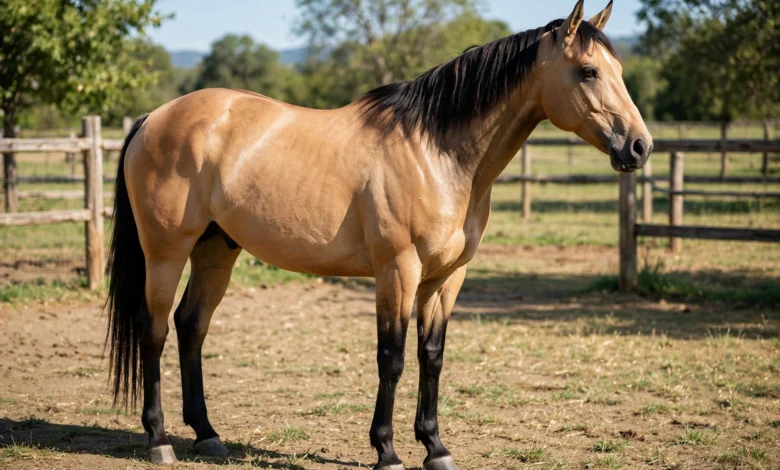
- Most common claimed meaning: Shorthand for a buckskin horse — a horse with a tan or gold body coat and black points (mane, tail, ear rims, and lower legs).
- What buckskin actually is: A coat colour, not a breed. It is produced when one copy of the cream dilution gene (gene symbol CCr, located in the SLC45A2 gene) acts on a bay base coat.
- Real things that do use the initials BK: Individual businesses and individual horses — for example, B-K Quarter Horses in Missouri, BK Corral in Alabama, and South Korean racehorses named B.K. Magic and B.K. Roan.
- What could not be verified: Claims that a BK horse is an elite “performance standard,” a saddle and tack brand, or a named horse-whispering training method. No authoritative source supports any of these.
Why Is “BK Horse” So Confusing?
Search for “bk horse” and you will not get one answer — you will get several different answers that contradict each other. When this article was researched in October 2026, the pages ranking for the phrase variously described a BK horse as:
- a buckskin horse (a colour description);
- a high-performance competition horse defined by training rather than breed;
- a premium brand of saddles and riding equipment;
- a gentle, trust-based “horse whisperer” training philosophy; and
- a loosely defined modern brand or lifestyle concept.
A genuine technical term does not behave this way. Recognised horse terms — “palomino,” “mustang,” “warmblood” — are defined consistently by registries, breed societies, and reference works. The BK horse pages, by contrast, appear on general content sites rather than equestrian authorities, give no registry, studbook, or scientific source for their definitions, and disagree with one another about the most basic question of what the term even refers to: a colour, a type of training, or a shop brand. That pattern is characteristic of pages written to capture a search keyword rather than to document a real thing.
There is a second reason the results are noisy. “BK” is a common pair of initials, so search engines also surface unrelated results that happen to contain the letters — historical articles about Marocco, the famous performing horse of William Bankes in the late 1500s and early 1600s (often called “Bankes’s horse”), pedigree records for an Arabian horse named BK Lanesh, and cattle listings from ranches that use BK as a herd prefix. None of these is what the explainer pages mean, and none of them defines a general term.
Is a BK Horse the Same as a Buckskin Horse?
This is the most frequently repeated claim, and it is the most plausible reading of the phrase — with an important caveat. The caveat is that “BK” is not a standard, documented abbreviation for buckskin. Standard equine colour references and registry colour lists spell the colour out in full, and the genetics literature refers to the underlying gene, not to a two-letter colour code. So if you see “BK” in a sale advertisement or a social media post, buckskin is the likeliest intended meaning — but it is an informal guess, not a decoding you can rely on. Always ask the seller or poster what they mean.
What can be stated with confidence is what a buckskin horse actually is, because that is well documented:
What makes a horse buckskin?
Buckskin is a hair-coat colour that resembles tanned deerskin. According to the American Buckskin Registry Association’s registration standards, a buckskin’s body coat is some shade of tan, ranging from very light cream to dark bronze, while the points — mane, tail, legs, and ear frames — are black or dark brown, and a true buckskin never has zebra striping on the legs.
Genetically, the colour is precise. A buckskin horse has a bay base coat plus exactly one copy of the cream dilution allele. The cream gene is an incompletely dominant allele in the SLC45A2 gene (the gene the UC Davis Veterinary Genetics Laboratory lists as producing the palomino, buckskin, smoky black, cremello, perlino, and smoky cream colours). One copy dilutes red pigment to yellow or gold but leaves black pigment largely untouched — which is why the body turns tan while the mane, tail, and legs stay black. Two copies on a bay base produce a much paler horse called a perlino, not a buckskin, and one copy on a chestnut base produces a palomino.
Is buckskin a breed?
No — and this matters for the BK question, because several web pages describe the “BK horse” as if it were a breed with fixed traits and temperament. Buckskin is a colour that can appear in many breeds, including American Quarter Horses, Morgans, Tennessee Walking Horses, and Mustangs, provided at least one parent carries the cream gene; not all breeds carry it. The American Buckskin Registry Association has recorded horses of this colour since the 1960s and registers animals of many breed types — light horses, draft horses, ponies, miniatures, and mules — precisely because the registry tracks a colour, not a pedigree breed. A buckskin’s size, temperament, and ability come from its actual breed and individual breeding, not from its coat. Any page that promises a set temperament, price range, or performance level for a “BK horse” as such is claiming more than the colour can guarantee.
Buckskin or dun?
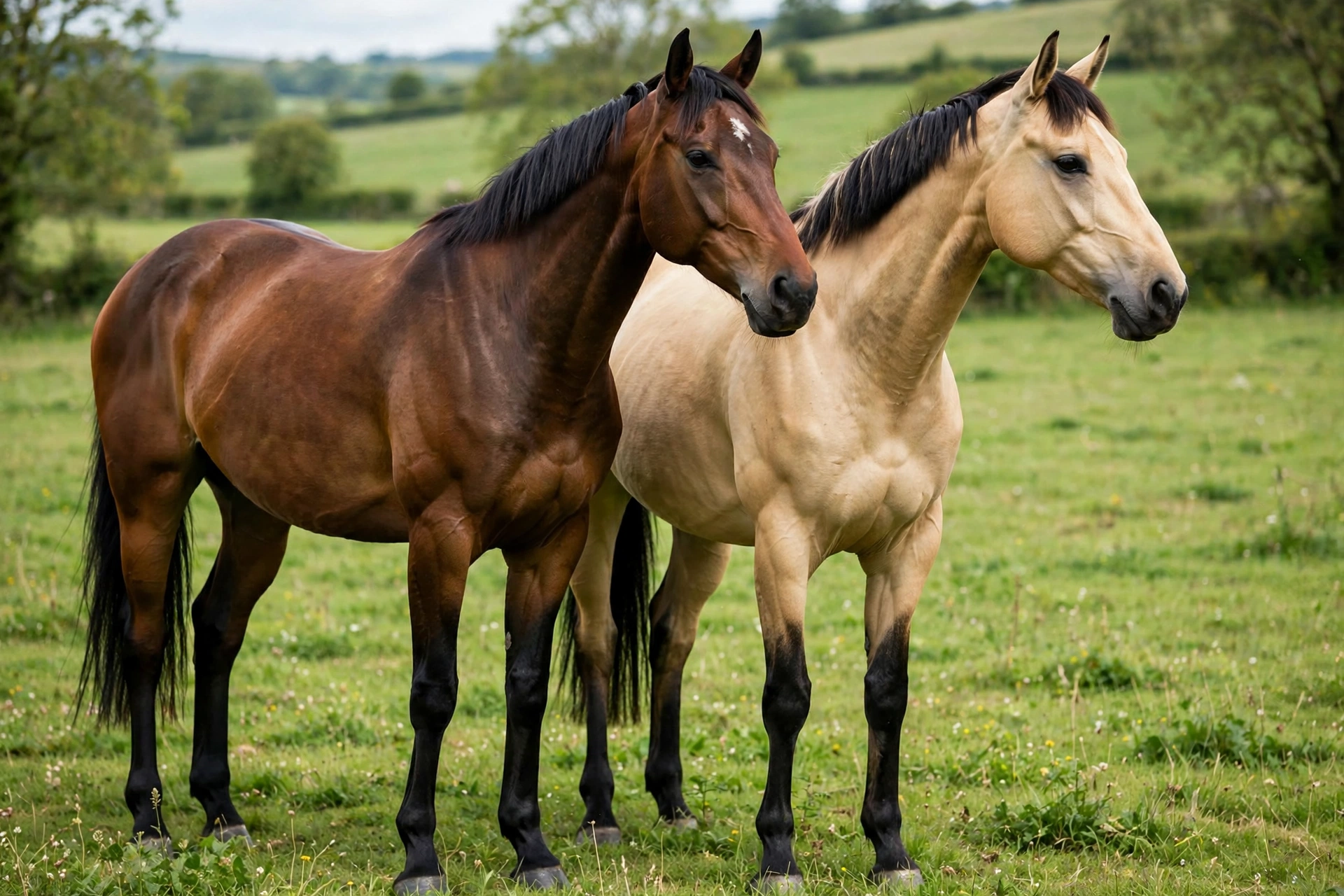
Buckskins are also routinely confused with dun horses, a separate colour caused by a different dilution gene. Dun horses always carry primitive markings — a dorsal stripe running the full length of the back, and often leg barring and shoulder striping — while ABRA’s standard states that a buckskin’s points will never have zebra stripes on the legs. A horse carrying both dilution genes is sometimes called a “dunskin.” If an advertisement is vague about colour, a DNA coat-colour test through a laboratory such as the UC Davis VGL can settle the genetics definitively.
If you enjoy careful animal explainers, you may also like our guide to the zombie ant fungus and how it hijacks an ant’s body.
What About the Other Claimed Meanings?
Because the honesty standard matters here, each of the other circulating definitions was checked against authoritative sources. None of them held up:
- “An elite performance horse.” No federation, breed society, or competition body recognises a performance category or standard called BK. Recognised performance classifications are discipline- and registry-specific; none uses this name.
- “A saddle and tack brand.” No established saddlery brand trading as “BK Horse” could be verified in retailer listings or trade sources. Well-known tack brands are extensively catalogued; this name is absent.
- “A horse-whispering training method.” Named training methods have founders, organisations, and published programmes that can be checked. No trainer, organisation, or programme named BK Horse could be verified.
- “A specific bloodline or breed.” No studbook or registry records a breed or bloodline under this name.
The responsible conclusion, as of October 2026, is that these are unverified claims generated around a keyword — not established facts about the horse world.
Real Horses and Businesses That Actually Use “BK”
The initials are genuinely in use — just as proper names for individual animals and firms, not as a general term:
- B.K. Magic — a South Korean racehorse based at Busan, trained by Kang Gon and sired by the stallion Hansen. Racing profiles record two wins, including a handicap win at Busan on 12 January 2025.
- B.K. Roan — another South Korean racehorse trained by Kang Gon, a filly sired by Ransom The Moon out of the mare Luv Road, owned by Ham Seung Won. Racing profiles record that she was unplaced in her only start, at Busan on 30 April 2023.
- B-K Quarter Horses — a farm and horse-training business listed in Clearmont, Missouri, United States.
- BK Corral — a Tennessee Walking Horse farm listed in Wilsonville, Alabama, described in business listings as selling horses bred for conformation and colour and offering riding lessons and boarding.
If your search was aimed at one of these, the initials are simply part of a name — the “BK” typically reflects an owner’s or farm’s initials, a common practice in horse and ranch naming. It does not connect them to each other, or to any shared breed or standard.
Is “BK Horse” About Burger King and Horsemeat?
Occasionally, yes — “BK” is also the universal abbreviation for Burger King, and the chain was caught up in the 2013 European horsemeat scandal. The verified facts, reported by the Associated Press and NPR in January and February 2013, are narrower than the headlines suggested. Ireland’s food safety authority found horse DNA in beef burger samples from several suppliers; Burger King dropped its Irish supplier Silvercrest Foods as a precaution, and trace horse DNA was found in samples at the supplier’s plant. Burger King stated that the affected product was never sold in its restaurants, and later testing reported by fact-checkers supported that no horsemeat was found in burgers served to customers. This is a real, documented story — but it is a separate topic from the equine phrase, and it is not what the “bk horse” explainer pages are about.
How Can You Check What a “BK Horse” Listing Really Means?
If you have met the term in an advertisement, a pedigree, or a post and need to know what you are actually looking at:
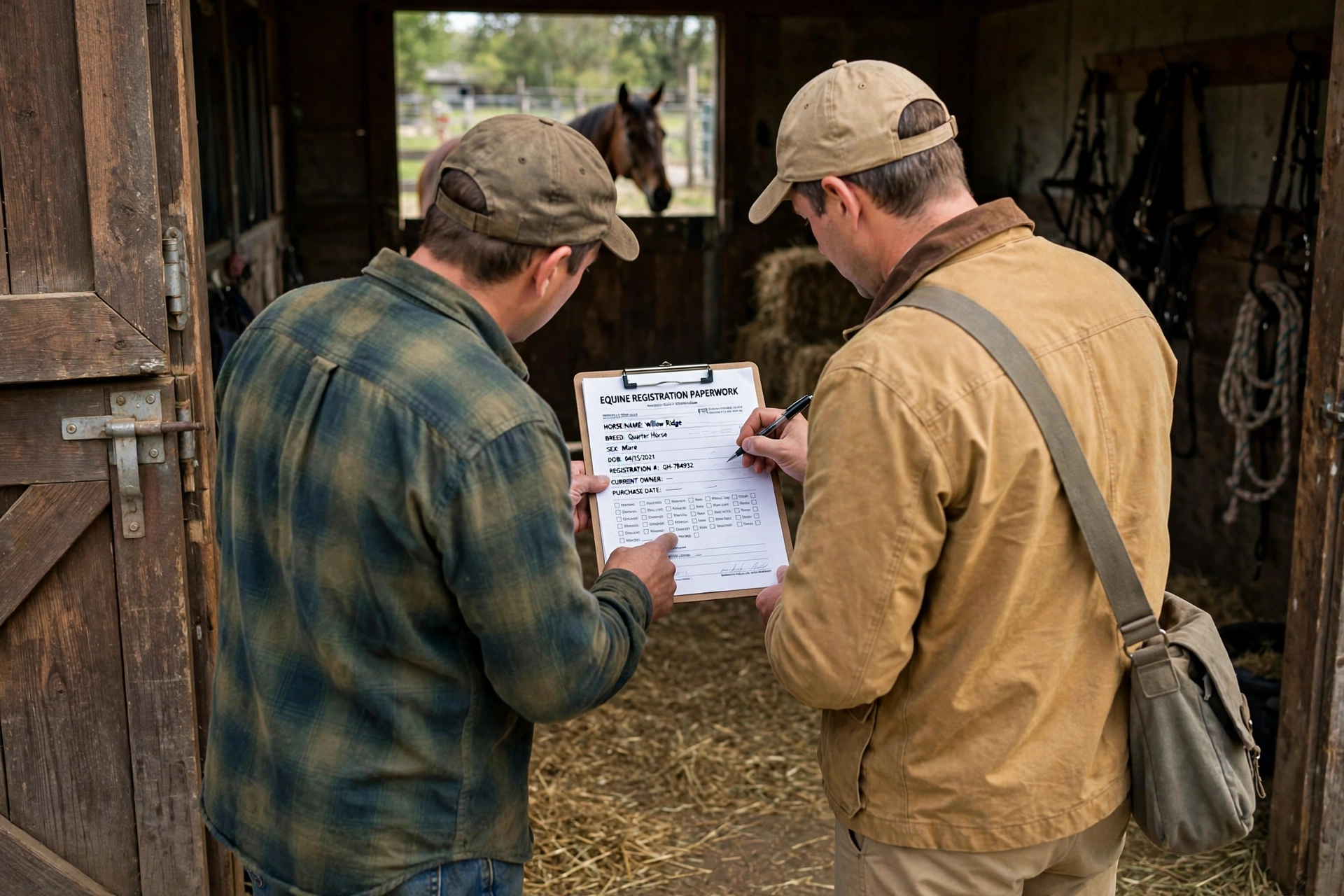
- Ask directly. Ask the seller or poster to spell out what BK stands for. If it is a colour claim, ask for the horse’s registered colour.
- Check the papers. A registered horse’s colour and breed are recorded by its breed registry. “BK” will not appear as a colour or breed on genuine papers.
- Look at the points. If the claim is buckskin, the horse should show a tan-to-bronze body with black or dark brown mane, tail, legs, and ear rims — and no zebra leg striping.
- Use DNA testing if it matters. A coat-colour panel from a university laboratory such as the UC Davis Veterinary Genetics Laboratory can confirm whether the horse carries one copy of the cream allele on a bay base — the genetic definition of buckskin.
- Treat sweeping claims as a warning sign. Fixed prices, guaranteed temperaments, or elite status attached to the label “BK horse” itself are not claims any registry backs.
Frequently Asked Questions
What is a BK horse?
As of October 2026, “BK horse” has no official definition in the horse world. It is not a breed, colour, or registry term. Online, it is most often used as informal shorthand for a buckskin horse, but the abbreviation is not standard, and several other meanings published online cannot be verified.
Is a BK horse the same as a buckskin horse?
That is the most common intended meaning, but they are not formally the same thing. Buckskin is a precisely defined coat colour — a bay base coat diluted by one copy of the cream gene (SLC45A2), giving a tan or gold body with black points. “BK” is simply an unofficial abbreviation some writers use for it.
Is buckskin a breed of horse?
No. Buckskin is a colour, not a breed. It appears in many breeds — including Quarter Horses, Morgans, and Tennessee Walking Horses — wherever the cream gene is present. The American Buckskin Registry Association registers the colour across many breed types.
Are there real horses actually named BK?
Yes, as individual names. Examples include the South Korean racehorses B.K. Magic and B.K. Roan, both trained by Kang Gon at Busan, and businesses such as B-K Quarter Horses in Missouri and BK Corral in Alabama. In these cases BK is part of a proper name, usually an owner’s initials.
How can I verify a horse advertised as a “BK horse”?
Ask the seller what BK means, check the horse’s registration papers for its recorded breed and colour, look for the buckskin pattern of a tan body with black points, and, if the colour matters for breeding or price, order a DNA coat-colour test from a laboratory such as the UC Davis Veterinary Genetics Laboratory.
The Bottom Line
“BK horse” is best understood as an ambiguous internet phrase, not a thing in its own right. The one meaning with a real, checkable subject behind it is the buckskin horse — a well-documented coat colour with exact genetics and its own registry. Everything beyond that, as of October 2026, is either a proper name belonging to a specific horse or business, or a claim that no authoritative source can confirm.