Towards or Toward: Which Is Correct and When Should You Use Each One?

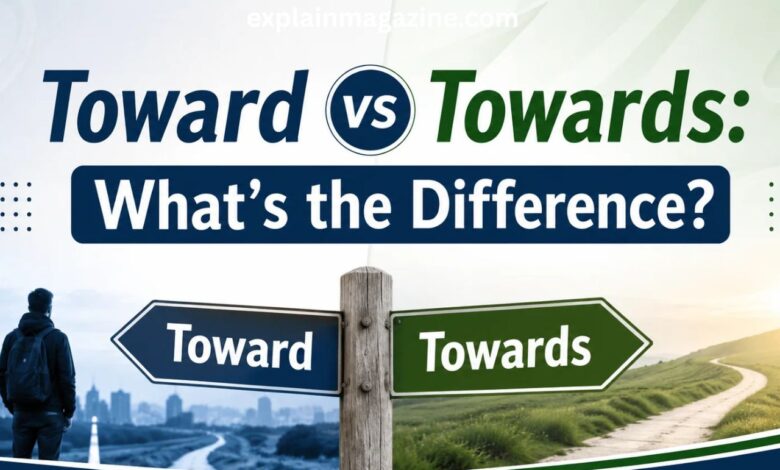
English learners and native speakers alike often wonder whether they should write towards or toward. Questions such as “is it towards or toward,” “towards or toward grammar,” and “when to use towards or toward” are extremely common because both words appear frequently in books, websites, newspapers, and everyday conversations.
The good news is that both toward and towards are correct. Unlike many grammar debates where one form is wrong, these two words have the same meaning and serve the same grammatical function. The main difference lies in regional preferences and style guides. American English generally favors toward, while British English, Australian English, and many other English-speaking regions prefer towards.
This guide explains the difference between toward and towards, their grammar rules, examples in sentences, AP Style recommendations, and how to choose the best option for your audience.
Quick Bio Table
| Information | Details |
|---|---|
| Main Keyword | Towards or Toward |
| Word Type | Preposition |
| Meaning | In the direction of, relating to, contributing to |
| Correct Form | Both Toward and Towards |
| US English Preference | Toward |
| UK English Preference | Towards |
| AP Style Preference | Toward |
| Meaning Difference | None |
| Common Usage | Direction, attitude, contribution, goals |
| Grammar Status | Both Grammatically Correct |
Is It Towards or Toward?
The simplest answer is that both words are correct.
They share the same meaning and can usually be used interchangeably without changing the meaning of a sentence. The primary distinction is regional preference rather than grammar. American English commonly uses toward, while British English more often uses towards.
Examples:
- She walked toward the door.
- She walked towards the door.
Both sentences are correct and mean exactly the same thing.
Towards or Toward Grammar
From a grammar perspective, both words function as prepositions.
They are commonly used to indicate:
- Direction
- Movement
- Purpose
- Attitude
- Contribution
- Progress toward a goal
Grammar authorities recognize both spellings as standard English. The choice usually depends on location, audience, or style guide requirements.
What Does Toward or Towards Mean?
Both forms can express several meanings.
Direction
Examples:
- The child ran toward the playground.
- The child ran towards the playground.
Relationship or Attitude
Examples:
- She has a positive attitude toward learning.
- She has a positive attitude towards learning.
Progress
Examples:
- We are working toward success.
- We are working towards success.
Contribution
Examples:
- The donation will go toward the project.
- The donation will go towards the project.
In all cases, the meaning remains the same.
Towards or Toward Difference
Many people expect a significant difference between the two words.
However, there is no difference in meaning.
The distinction is primarily based on language variety:
| American English | British English |
|---|---|
| Toward | Towards |
| Forward | Forwards |
| Backward | Backwards |
| Upward | Upwards |
American English often drops the final “s” in directional words, while British English commonly retains it.
Towards or Toward in AP Style
Writers following Associated Press style often ask which version should be used.
AP Style recommends toward without the final “s.” This preference applies to news articles, journalism, and other content following AP guidelines.
Examples:
- The company is moving toward expansion.
- Officials are working toward a resolution.
If you write for newspapers, magazines, or websites using AP Style, toward is generally the preferred option.
When to Use Towards or Toward
The best choice depends on your audience.
Use Toward When:
- Writing for an American audience
- Following AP Style
- Following Chicago Style
- Creating content primarily for US readers
Use Towards When:
- Writing for a British audience
- Writing for Australian readers
- Following UK English conventions
- Using British editorial standards
Both options remain grammatically acceptable.
Working Towards or Toward
A common phrase is working toward(s).
Both forms are correct.
Examples:
- She is working toward a promotion.
- She is working towards a promotion.
The phrase means making progress toward a goal or objective. The choice again depends on regional preference.
Leaning Towards or Toward
Another frequently searched expression is leaning toward(s).
Examples:
- I am leaning toward accepting the offer.
- I am leaning towards accepting the offer.
This phrase means being inclined to choose one option over another. Both versions are equally correct.
I Ran Towards or Toward
When describing physical movement, either word works.
Examples:
- I ran toward the finish line.
- I ran towards the finish line.
The meaning remains unchanged because both indicate direction.
Towards or Toward the End
Both spellings are acceptable when referring to time.
Examples:
- Toward the end of the meeting, everyone became more focused.
- Towards the end of the meeting, everyone became more focused.
In American English, “toward the end” is more common. In British English, “towards the end” is generally preferred.
Towards or Toward Me
When describing movement in someone’s direction, both forms are correct.
Examples:
- He walked toward me.
- He walked towards me.
Again, only regional preference changes. The meaning is identical.
Contribute Towards or Toward
When discussing financial contributions or support, either form can be used.
Examples:
- They contributed toward disaster relief.
- They contributed towards disaster relief.
Both express the idea of helping fund or support something.
Gravitate Towards or Toward
The phrase gravitate toward(s) is common in both spoken and written English.
Examples:
- People often gravitate toward familiar brands.
- People often gravitate towards familiar brands.
The phrase means being naturally attracted to something.
All Proceeds Will Go Towards or Toward
This expression appears frequently in fundraising campaigns.
Examples:
- All proceeds will go toward charity.
- All proceeds will go towards charity.
American organizations often use toward, while British organizations typically use towards. Both are correct.
Attitude Towards or Toward
When discussing opinions, feelings, or behavior, either spelling is acceptable.
Examples:
- She has a positive attitude toward change.
- She has a positive attitude towards change.
This usage is common in academic writing, business communication, and everyday conversation.
Common Mistakes to Avoid
Although both forms are correct, consistency is important.
Incorrect:
- We are moving toward success and working towards a solution.
While not grammatically wrong, mixing spellings in the same document may look inconsistent.
Better:
- We are moving toward success and working toward a solution.
- We are moving towards success and working towards a solution.
Choose one style and use it consistently throughout your writing.
Easy Trick to Remember
A simple memory rule can help:
- American English = Toward
- British English = Towards
If you are unsure which audience you are writing for, either option is acceptable as long as you remain consistent throughout the document.
Final Thoughts
Read More: Wether or Whether: Which Is Correct and When Should You Use It?
The debate over towards or toward is not about right versus wrong. Both words are grammatically correct, share the same meaning, and have been used interchangeably for centuries. The primary difference is regional preference. American English and AP Style generally favor toward, while British English, Australian English, and many international writers prefer towards. Understanding this distinction helps writers choose the form that best matches their audience and maintain consistency throughout their work.
At explainmagazine, we strive to make grammar topics easy to understand and practical to apply. Knowing when to use toward or towards can help you write more confidently, whether you are creating academic papers, professional documents, blog posts, or everyday messages.