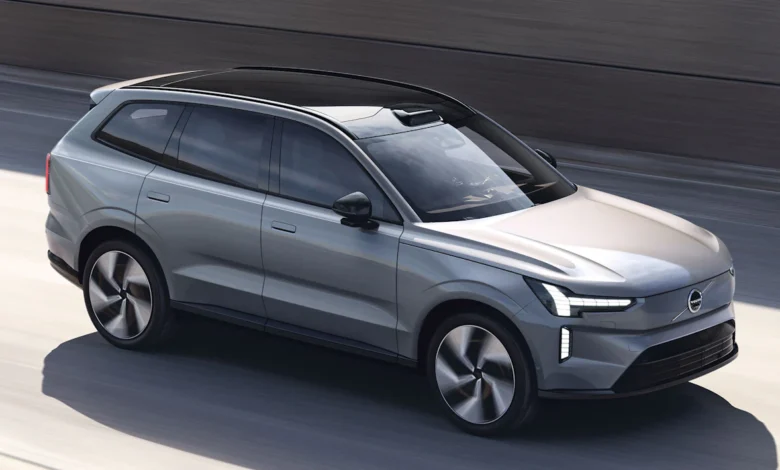
What the Volvo EX90 Is
The Volvo EX90 is a battery-electric, full-size luxury crossover SUV and the flagship of the Swedish brand’s range. Revealed to the world in November 2022 and in production since May 2024, it carries seven seats as standard and represents the electric successor in spirit to the long-running XC90. The car is built at Volvo’s plant in Ridgeville, South Carolina, with additional production in China and Malaysia, and it sits on the advanced SPA2 platform that it shares with its close relative, the Polestar 3, giving it thoroughly modern underpinnings.
Flagship is a word car makers use often, but here it genuinely means something, because this model introduces the technology that will filter down through the rest of the Volvo range in the years ahead. Everything about it, from the computing hardware to the safety systems, was designed to show where the brand is heading as it moves towards an all-electric future. Buyers who once would have chosen the largest petrol or diesel Volvo now have a silent, smooth alternative that keeps the practicality, space and calm Scandinavian character they loved, while adding the instant response and low running costs that only an electric drivetrain can deliver. The full development story is recorded in the Volvo EX90 encyclopedia entry, which follows the model from reveal to production.
Design and Interior: Scandinavian Calm
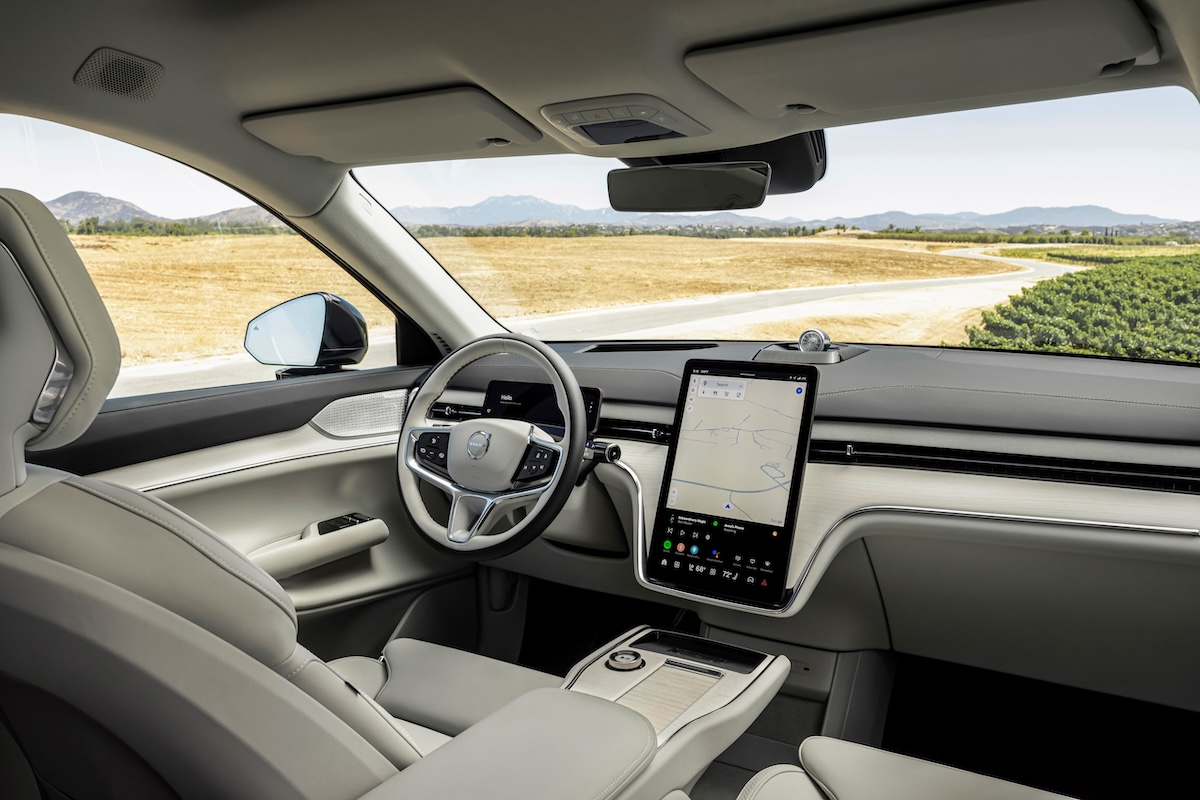
Open the door and the Volvo EX90 cabin feels more like a Scandinavian living room than a traditional car interior, with clean lines, soft light and an uncluttered dashboard that puts calm ahead of clutter. Seven seats come as standard, arranged across three rows, while a six-seat layout is available for buyers who prefer extra space and easier access in the middle row. On higher trims, the seats are trimmed in rich Nappa leather and the dashboard and doors feature natural wood, materials chosen to feel warm and honest rather than flashy or over-designed for the sake of it.
Two features show how much thought went into the details. The panoramic roof uses electrochromic glass, which means it can turn from clear to opaque at the touch of a button, shading the cabin on bright days without any physical blind. Then there is the sound system: a Bowers & Wilkins high-fidelity audio setup that turns the quiet electric cabin into something close to a concert hall. Because there is no engine noise to compete with, music, podcasts and phone calls all sound clearer, and long journeys pass in a relaxed hush that suits the car’s character perfectly.
Battery, Range and Charging
The first cars, from the 2024 and 2025 model years, used a 400-volt electrical architecture with DC fast charging at up to 250 kW, which was competitive when the car was launched. Buyers could choose between battery packs of 104 and 111 kilowatt-hours, the larger of the two aimed at drivers who regularly cover long distances and want maximum range between stops. Even in this earlier form, the big Volvo was designed around the reality of family life, where charging usually happens at home overnight and the public fast charger is only needed on longer holiday journeys.
The updated 2026 models take a big step forward, because the Volvo EX90 now uses an 800-volt architecture with DC fast charging at up to 350 kW, allowing a charge from 10 to 80 percent in about 22 minutes under the right conditions. The battery choices change too, with packs of 92 and 106 kilowatt-hours, and the most efficient versions offer a range of up to 627 kilometres, or 390 miles, on the WLTP test cycle. That combination of long range and genuinely fast charging removes much of the planning stress that puts some buyers off electric cars.
Performance and Powertrains
Buyers can choose from three powertrains, starting with a single-motor, rear-wheel-drive version producing 329 horsepower, which is more than enough for relaxed everyday driving and motorway cruising. Above it sits the Twin Motor all-wheel-drive model with 449 horsepower, adding a second motor on the front axle for stronger acceleration and extra grip in wet or icy weather. Both versions share the smooth, silent character that defines electric driving, delivering their power without gears, delay or drama, which makes the big SUV feel easy and calm even when it is fully loaded with people and luggage.
At the top of the range, the Twin Motor Performance version turns this sensible family car into something startlingly quick, with 680 horsepower, or 500 kilowatts, and 870 Newton metres of torque. It accelerates from 0 to 100 kilometres per hour in about 4.2 seconds, figures that would have embarrassed dedicated sports cars not long ago. Volvo still keeps a sensible head, though, because like every modern Volvo the top speed is limited to 180 kilometres per hour. The performance is there for safe overtaking and effortless merging, not for chasing numbers on an empty road.
The Computer on Wheels
Perhaps the biggest change is invisible, because the Volvo EX90 is built around a powerful new core computer based on the Nvidia Drive AGX Orin platform, which handles everything from safety systems to entertainment. Volvo calls its approach the Superset tech stack, one shared technology base that improves over time instead of being frozen on the day the car leaves the factory. A large 14.5-inch centre display controls most functions, and just as future technology like 3D printed houses is changing how things are built, this software-first approach is changing how cars are designed, updated and improved throughout their lives.
The practical benefit of this computing power is that the car can genuinely get better while it sits on your driveway. Over-the-air software updates arrive without a trip to the dealer, refining everything from charging behaviour to driver assistance, and features that were not ready at launch can be added later when they have been properly tested. It also means the safety and assistance systems have the processing headroom to grow more capable over the years. For buyers used to cars that feel outdated within a few years, this promise of a vehicle that keeps evolving is a major part of the appeal.
Safety Technology Explained
Safety has been Volvo’s calling card for decades, and this car wraps its technology in what the company calls Safe Space Technology, a suite of sensors and systems designed to understand the world inside and outside the vehicle. One highlight is the Driver Understanding system, which watches the driver’s eyes and attention to detect distraction or drowsiness. If it senses that the person behind the wheel is not looking at the road, or is becoming impaired, the car can warn them and, if necessary, increase its support to help keep everyone safe.
Even more remarkable is the Occupant Sensing system, which uses cabin radar sensitive enough to detect the tiny breathing movements of a sleeping baby or a pet accidentally left inside the car, and then alerts the owner so a tragedy is avoided. On the move, Pilot Assist supports the driver with steering, speed and distance on longer journeys, while Park Pilot Assist can help guide the car into parking spaces. It all adds up to reassuring results: the model has earned a five-star ANCAP safety rating, underlining Volvo’s reputation in this area.
Price and Trims
In the United States, the 2026 range starts at $78,090 for the Single Motor Plus, a price that includes the destination charge, positioning the car firmly in luxury territory alongside established German rivals. Stepping up to the Twin Motor Plus costs around $81,390, adding all-wheel drive and a useful jump in performance for a relatively modest increase. Standard equipment is generous even at this level, reflecting the fact that buyers in this class expect advanced safety technology, a large central display and high-quality materials without having to tick a long list of expensive options.
At the top of the range, the Performance Ultra sits at around $90,740, combining the 680-horsepower twin-motor powertrain with the richest interior specification, including the finest leather, wood and audio options. That is serious money, but it buys one of the most powerful and best-equipped seven-seat electric vehicles on sale, from a brand with an unmatched safety story. Buyers should also factor in the running costs, because charging at home is usually far cheaper than petrol, and electric cars typically need less routine servicing than their combustion-powered equivalents over the same period.
Who Should Buy It
This is, first and foremost, a car for families who need seven proper seats but refuse to give up luxury, calm and safety to get them. Parents who spend their weeks on school runs and their holidays on long road trips will appreciate the huge range, the fast charging and the cabin radar that watches over sleeping children. It also suits technology lovers who like the idea of a car that improves through software updates, and drivers moving from a large petrol SUV who want the same presence and practicality without the fuel bills or the tailpipe emissions.
It is not for everyone, of course. Buyers who cannot charge at home will need to think carefully about local public charging, because a large electric SUV makes the most sense when it starts each morning with a full battery. Its size also demands respect in tight city car parks, even with parking assistance on hand. And shoppers with a smaller budget will find the price firmly in premium territory. But for those who can charge at home and who value safety, space and serenity above badge drama, it makes a very convincing case for itself.
Frequently Asked Questions
Is the Volvo EX90 fully electric? Yes. It is a battery-electric vehicle with no petrol or diesel engine, no exhaust pipe and no fuel tank, designed from the ground up as an electric car rather than converted from a combustion model. Depending on the model year, it uses battery packs ranging from 92 to 111 kilowatt-hours, driving either a single rear motor or twin motors for all-wheel drive. You charge it at home or at public chargers, and regenerative braking recovers energy as you slow down, feeding power back into the battery to extend your range.
How far can the Volvo EX90 travel on a single charge? In its most efficient 2026 form, the official WLTP figure is up to 627 kilometres, which is about 390 miles, although real-world range always depends on speed, weather, terrain and how the car is loaded. Earlier versions with the largest 111 kilowatt-hour battery were also built for long-distance travel, and every version supports fast DC charging for top-ups on the move. For most families, the practical answer is simple: charge overnight at home, start each day full, and treat motorway charging stops as short breaks rather than major events.
How long does charging take? On the updated 2026 models, the 800-volt system allows DC fast charging at up to 350 kilowatts, which can take the battery from 10 to 80 percent in about 22 minutes when you use a suitably powerful charger and conditions are right. Earlier 400-volt cars charge at up to 250 kilowatts, which is still quick by any standard. At home, most owners simply plug in overnight on a wallbox and wake up to a full battery, which is the cheapest and most convenient pattern for everyday driving.
How many seats does it have, and is it good for families? Seven seats are standard, arranged in three rows, and a six-seat version is available if you prefer more space and easier access in the middle row. For family life, the details matter as much as the seat count: the cabin radar can detect a sleeping child or pet left inside and alert you, the driver monitoring system watches for distraction on long trips, and the calm, quiet cabin makes long journeys noticeably less tiring for everyone on board, including the people in the very back.
Final Thoughts
Judged on its own terms, this big electric Volvo succeeds at exactly what it set out to do: carry seven people in safety, comfort and near silence, while pointing clearly at where the brand goes next. The 2026 updates, especially the 800-volt charging and the powerful new core computer, fix the areas where the early cars were merely competitive and turn them into genuine strengths. It is not a cheap car, and it never pretends to be, but the engineering depth on display justifies serious consideration from anyone shopping at this level.
For families ready to go electric without giving anything up, the formula is hard to argue with: genuine seven-seat practicality, a calm Scandinavian cabin, performance that ranges from relaxed to startling, and safety technology that literally watches over the people you love most. Add home charging and software that keeps improving the car year after year, and you have a flagship that feels built for the long term. The electric era has produced many fast cars; this one adds something rarer, which is a sense of care in every decision its makers took.