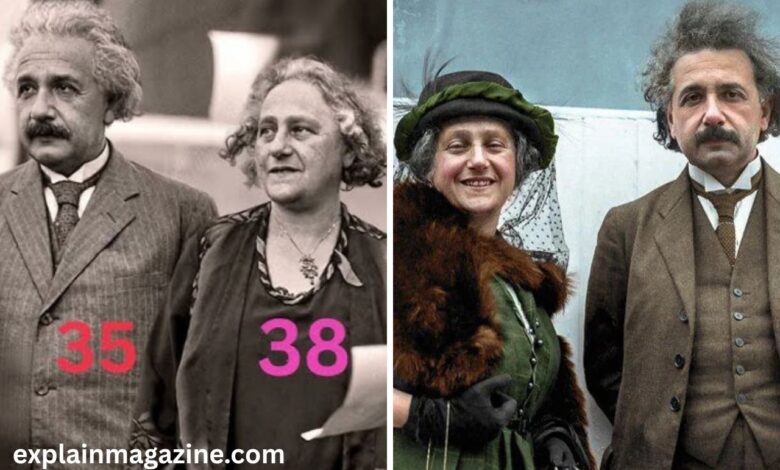
Elsa Einstein
When people hear the name Albert Einstein, they immediately think of groundbreaking scientific discoveries, the theory of relativity, and one of the greatest minds in history. Yet behind the famous physicist stood a woman whose role is often overlooked: Elsa Einstein. While she is frequently remembered as Albert Einstein’s second wife, her story is far more interesting than a simple footnote in history.
Elsa Einstein was a devoted companion, caregiver, and manager who helped Albert navigate the challenges that came with worldwide fame. She witnessed some of the most significant moments in his life, supported him through illness, and stood beside him as political turmoil forced them to leave Germany and begin a new life in the United States. Understanding Elsa Einstein provides a more complete picture of the personal world surrounding one of history’s greatest scientists.
Early Life of Elsa Einstein
Elsa Einstein was born Elsa Einstein on January 18, 1876, in Germany. Interestingly, she was born with the Einstein surname because she was related to Albert Einstein long before they married. Their mothers were sisters, making them first cousins on one side of the family, and they were also related through their fathers’ family lines.
Growing up in a middle-class German family, Elsa experienced a relatively conventional upbringing compared to the extraordinary life she would later lead. As a child, she occasionally spent time with her cousin Albert during family gatherings. Neither could have predicted that their lives would become deeply intertwined decades later.
In 1896, Elsa married Max Löwenthal, a businessman from Berlin. The marriage produced three children, though one son died in infancy. Elsa and Max eventually divorced in 1908, leaving her to focus on raising her daughters, Ilse and Margot.
Reconnecting With Albert Einstein
By the early 1910s, Albert Einstein had already established himself as a respected scientist. At the time, he was married to his first wife, Mileva Marić, with whom he had children and shared an intellectual background.
Around 1912, Albert and Elsa renewed their relationship. Their correspondence grew increasingly personal, and the bond between them strengthened. During this period, Albert’s first marriage was deteriorating, and his relationship with Elsa became more significant.
When Albert moved to Berlin in 1914, Elsa became an important figure in his daily life. Unlike his first marriage, which involved intellectual collaboration and scientific discussions, Elsa’s role was often more practical and supportive. She helped organize his personal affairs and provided stability during a period of immense professional growth.
Marriage to Albert Einstein
Albert Einstein’s divorce from Mileva Marić was finalized in 1919. Shortly afterward, he married Elsa Einstein on June 2, 1919. The marriage marked the beginning of a partnership that would last until Elsa’s death in 1936.
Their marriage coincided with Albert’s rise to international fame. In the years following the confirmation of his theory of general relativity, Einstein became one of the world’s most recognized scientists. Newspapers across the globe reported on his achievements, and invitations for lectures, interviews, and public appearances poured in.
Managing such attention was no easy task. Elsa became a crucial buffer between Albert and the outside world. She handled correspondence, coordinated schedules, and protected him from constant interruptions that could distract him from his work.
While Albert’s scientific genius drew the headlines, Elsa often worked quietly behind the scenes to ensure that his professional life ran smoothly.
Elsa Einstein’s Role as Caregiver
One of the most important aspects of Elsa Einstein’s life was her role as Albert’s caregiver.
In 1917, Albert suffered a serious illness that left him physically weakened. During this difficult period, Elsa cared for him and helped nurse him back to health. Her dedication strengthened their relationship and demonstrated her willingness to prioritize his well-being.
Throughout their marriage, Elsa remained deeply involved in managing Albert’s health. She monitored his schedule, encouraged rest, and attempted to shield him from unnecessary stress. Given the intense public interest surrounding Einstein, this was no small responsibility.
Many historians believe that Elsa’s support contributed significantly to Albert’s ability to maintain his demanding professional life during the height of his fame.
Living With a Global Celebrity
Being married to Albert Einstein was unlike being married to an ordinary person.
As Einstein’s fame expanded internationally, the couple traveled extensively. They visited numerous countries, attended public events, and met influential political leaders, academics, and cultural figures. Wherever they went, Albert attracted enormous attention.
For Elsa, this meant adapting to a life constantly under public scrutiny. She frequently acted as hostess, organizer, and gatekeeper. Her calm and practical personality often balanced Albert’s absent-minded and highly focused nature.
The couple’s travels also exposed them to major political changes occurring across Europe during the 1920s and early 1930s. These developments would eventually have a profound impact on their lives.
Escaping Nazi Germany
One of the most dramatic chapters in Elsa Einstein’s life involved the rise of Nazi Germany.
As Adolf Hitler and the Nazi Party gained power, Jewish citizens faced increasing discrimination and danger. Albert Einstein, who was Jewish and openly opposed extremist political ideologies, became a target of hostility. Returning to Germany became increasingly risky for the couple.
Eventually, Elsa and Albert made the difficult decision to leave Germany permanently. Their property was seized, and the political situation made it clear that returning was not an option. In 1933, they immigrated to the United States and settled in Princeton, New Jersey.
This move represented both a loss and a new beginning. While they left behind their homeland, they gained safety and stability in America.
Life in Princeton
Princeton became the final home of Elsa Einstein.
Albert accepted a position at the Institute for Advanced Study, where he continued his research and teaching. Meanwhile, Elsa worked to establish a comfortable household and help her family adjust to life in a new country.
Unfortunately, these years were marked by personal hardships. Elsa’s daughter Ilse developed cancer, and Elsa traveled to be with her during her final days. The loss deeply affected her and placed additional emotional strain on an already challenging period of life.
Despite these difficulties, Elsa remained committed to supporting Albert and maintaining family stability.
Challenges Within the Marriage
Like many historical marriages, the relationship between Elsa and Albert was not without complications.
Albert Einstein’s personal life has been the subject of extensive discussion by historians. Accounts suggest that he maintained relationships with other women during various periods of his life, creating tensions within his marriages. Despite these challenges, Elsa continued to support him and manage many aspects of his personal affairs.
Some historians view their marriage as one built on companionship, practicality, and mutual dependence rather than romantic idealism. Elsa understood Albert’s personality better than most people and accepted many of the complexities that came with being married to a world-famous genius.
The Final Years of Elsa Einstein
During the mid-1930s, Elsa’s health began to decline.
She suffered from heart and liver problems, which gradually weakened her condition. At the same time, she was coping with the emotional impact of family losses and the challenges of adjusting to a new country.
On December 20, 1936, Elsa Einstein died at the family home in Princeton, New Jersey, at the age of 60. Her death marked the end of a partnership that had lasted nearly two decades.
Albert Einstein would continue living in Princeton until his own death in 1955, but those who knew the couple recognized that Elsa had played a vital role in his personal and professional life.
Elsa Einstein’s Legacy
Although Elsa Einstein is often remembered primarily as Albert Einstein’s wife, her legacy deserves recognition in its own right.
She was a devoted mother, caregiver, and companion who helped one of history’s greatest scientific minds navigate fame, illness, political upheaval, and personal challenges. Her contributions were not made in laboratories or lecture halls but in the everyday support that allowed Albert Einstein to focus on his work.
In many ways, Elsa’s story highlights the often-overlooked individuals who stand behind famous historical figures. While she never sought the spotlight, her influence was significant and enduring.
Conclusion
Read More: Paul Walker Accident: What Really Happened?
Elsa Einstein lived an extraordinary life shaped by family connections, personal resilience, and historical events. From her childhood in Germany to her years alongside Albert Einstein during some of the most transformative moments of the twentieth century, she remained a loyal and steady presence.
Her story reminds us that history is not made solely by famous names but also by the people who support, protect, and inspire them. Elsa Einstein’s role in Albert Einstein’s life was far more important than many realize, and her contributions continue to interest historians and readers alike. For anyone exploring the human side of scientific history, Elsa Einstein remains a fascinating figure worthy of remembrance—a story that readers of explainmagazine can appreciate for its depth, humanity, and historical significance.