Principal or Principle: What’s the Difference and Which One Is Correct?

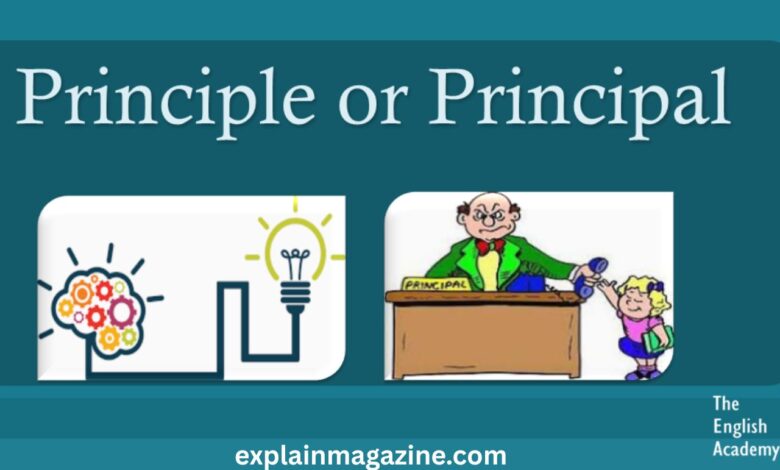
The words principal and principle are among the most commonly confused words in the English language. Since they sound exactly alike, many writers accidentally use the wrong spelling. This confusion becomes even more common in discussions about loans, mortgages, investments, schools, businesses, and professional titles.
If you have ever wondered whether it is loan principal or principle, school principal or principle, or investment principal or principle, you are not alone. Understanding the difference is important because these words have completely different meanings despite their identical pronunciation.
The good news is that once you learn the definitions and common uses of each word, choosing the correct one becomes much easier.
Quick Bio Table
| Topic | Details |
|---|---|
| Main Keyword | Principal or Principle |
| Word Type | Homophones |
| Principal | Noun and Adjective |
| Principle | Noun Only |
| Financial Usage | Principal |
| School Leader | Principal |
| Rule or Belief | Principle |
| Business Usage | Principal |
| Loan Terminology | Principal |
| Common Error | Confusing Principal with Principle |
Is It Principal or Principle?
The answer depends entirely on the meaning you want to express.
Principal
The word principal can function as both a noun and an adjective.
It commonly means:
- Most important
- Main or primary
- A person in charge
- An original amount of money invested or borrowed
Examples:
- The principal reason for the delay was bad weather.
- The school principal announced a new policy.
- The loan principal has been reduced.
Principle
The word principle is always a noun.
It refers to:
- A rule
- A belief
- A moral standard
- A fundamental truth
- A guiding idea
Examples:
- Honesty is an important principle.
- The principle of gravity explains how objects fall.
- She refused on principle.
Understanding this distinction solves most principal-versus-principle questions.
Loan Principal or Principle?
One of the most frequently searched questions concerns loans.
The correct term is:
Loan Principal
In finance, the principal is the original amount of money borrowed before interest, fees, or charges are added.
Example:
- The loan principal is $20,000.
- Extra payments help reduce the principal faster.
- Interest is calculated based on the outstanding principal.
Using loan principle is incorrect because a principle is a rule or belief, not money.
Principal or Principle of a Loan
When discussing the amount borrowed in a loan, mortgage, or credit agreement, the correct word is always principal.
Examples:
- The principal of the loan remains unpaid.
- The borrower reduced the principal through additional payments.
- Interest and principal are separate components of repayment.
Whenever money is involved, principal is usually the correct choice.
Debt Principal or Principle
The same financial rule applies to debt.
Correct:
- Debt principal
- Principal balance
- Principal repayment
Incorrect:
- Debt principle
Examples:
- The borrower paid down the debt principal.
- Most of the monthly payment went toward interest instead of principal.
- Reducing principal lowers future interest costs.
In debt management and lending, principal always refers to the original amount owed.
Mortgage Principal or Principle
Homeowners often encounter this term on mortgage statements.
The correct phrase is:
Mortgage Principal
The mortgage principal is the portion of the home loan that was originally borrowed.
Examples:
- The mortgage principal decreased after several years of payments.
- Extra payments can reduce mortgage principal faster.
- Interest charges are calculated using the remaining principal balance.
Mortgage principle is grammatically incorrect because the term refers to money rather than a rule or belief.
Investment Principal or Principle
Investors frequently encounter the term principal.
The correct expression is:
Investment Principal
Investment principal refers to the original amount of money invested.
Examples:
- The investor wants to preserve the principal.
- The investment earned income without reducing principal.
- The principal remains protected.
A useful rule to remember is:
- Principal = Money
- Principle = Belief
This simple distinction helps prevent many writing mistakes.
Is It Principal or Principle in Finance?
In finance, the correct word is almost always principal when discussing money.
Financial uses include:
- Loan principal
- Mortgage principal
- Investment principal
- Principal balance
- Principal repayment
- Principal amount
Examples:
- The principal balance fell below $50,000.
- Investors aim to protect their principal.
- The principal amount determines interest calculations.
Principle is only used in finance when discussing theories, ethics, or rules.
Example:
- Diversification is a basic investment principle.
Is Money Principal or Principle?
Money itself is generally associated with principal when referring to an original amount invested or borrowed.
Examples:
- The principal was returned at maturity.
- She protected her principal investment.
- The principal remains untouched.
Therefore, when discussing capital, investments, loans, or borrowed funds, principal is the correct term.
Money Principal or Principle
Many writers accidentally use principle in financial documents.
Correct examples include:
- Principal investment
- Principal balance
- Principal payment
- Principal amount
Incorrect examples include:
- Principle investment
- Principle balance
- Principle payment
Whenever the discussion involves money, principal is typically the right choice.
Principal or Principle for Money
The easiest answer is:
If you are talking about money, use principal.
Examples:
- Principal on a loan
- Principal in an investment
- Principal amount borrowed
- Principal repayment
If you are talking about values, ethics, rules, or beliefs, use principle.
Examples:
- Ethical principle
- Scientific principle
- Legal principle
- Moral principle
School Principal or Principle
One of the most common mistakes involves educational settings.
The correct term is:
School Principal
A principal is the person in charge of a school.
Examples:
- The school principal welcomed new students.
- The principal addressed the assembly.
- Parents met with the principal.
School principle is incorrect because principle refers to a belief or rule, not a person.
Principal or Principle of a Company
In business, principal can have several meanings.
It may refer to:
- The owner
- The lead executive
- The primary individual responsible
- The most important entity
Examples:
- The company’s principal approved the proposal.
- The principal investor funded the project.
- The principal partner attended the meeting.
When discussing business leadership or importance, principal is usually correct.
Dealer Principal or Principle
In the automotive and business world, the correct title is:
Dealer Principal
A dealer principal is the owner or chief executive responsible for managing a dealership.
Examples:
- The dealer principal approved the expansion.
- The dealer principal oversees operations.
- The dealer principal manages overall strategy.
Dealer principle would be incorrect because the role refers to a person.
Principal or Principle Investigator
The correct title is:
Principal Investigator
A principal investigator is the lead researcher responsible for a scientific study or research project.
Examples:
- The principal investigator supervised the research team.
- Funding was awarded to the principal investigator.
- The principal investigator published the findings.
Principle investigator is incorrect because the title refers to a person in authority.
Principal or Principle Engineer
The correct professional title is:
Principal Engineer
A principal engineer is a senior technical expert within an organization.
Examples:
- The principal engineer designed the system architecture.
- She was promoted to principal engineer.
- The principal engineer led the project.
Again, principal refers to a position or rank, making it the correct choice.
Endowment Principal or Principle
In finance and nonprofit management, the correct term is:
Endowment Principal
The principal represents the original funds invested in an endowment.
Examples:
- The organization preserves the endowment principal.
- Income is generated while protecting principal.
- Spending policies are designed to maintain principal value.
Because the discussion concerns money, principal is the correct word.
Out of Principal or Principle
This phrase often appears in investment and trust discussions.
The correct expression is:
Out of Principal
Examples:
- The withdrawal came out of principal.
- Spending from principal reduced the account value.
- The trustee avoided using principal funds.
Using principle would change the meaning entirely and would be incorrect in financial contexts.
Easy Trick to Remember Principal vs Principle
A simple memory trick can help:
Principal = Person, Position, or Payment
Think:
- School principal
- Principal engineer
- Principal investigator
- Loan principal
- Investment principal
Principle = Rule or Belief
Think:
- Moral principle
- Scientific principle
- Ethical principle
- Legal principle
If the word refers to a person, importance, authority, or money, use principal.
If it refers to a rule, truth, belief, or standard, use principle.
Final Thoughts
Read More: Colon or Semicolon: When to Use Each Correctly in English Grammar
The confusion between principal or principle exists because the words sound identical, but their meanings are very different. Principal refers to a person in authority, something of primary importance, or an amount of money involved in loans and investments. Principle refers to a rule, belief, moral standard, or fundamental truth.
Remember that financial terms such as loan principal, mortgage principal, investment principal, and principal balance always use principal. Likewise, professional titles such as school principal, principal investigator, and principal engineer require principal. Use principle only when discussing rules, ethics, beliefs, or theories.
At explainmagazine, we aim to simplify confusing English words and grammar topics so readers can write with greater confidence and accuracy. Understanding the difference between principal and principle is a valuable step toward clearer communication in both professional and everyday writing.