
What Are Easter Traditions
Easter traditions are the customs and celebrations that mark Easter, the central feast of the Christian calendar, which commemorates the resurrection of Jesus and arrives each spring after the forty days of Lent. For many people, the holiday blends church services and family gatherings with playful customs such as egg hunts, chocolate bunnies, and festive meals. The word Easter itself may come from the Anglo-Saxon goddess name Eostre, and in most European languages the same word covers both Easter and the Jewish Passover. Because Easter falls on a different date every year, tied to the first Sunday after the first full moon following the spring equinox, the season carries a sense of renewal that predates Christianity itself.
What makes the holiday fascinating is how differently it is celebrated from place to place, with solemn processions in Rome, water fights in Poland, pot-smashing in Greece, and crime novels in Norway all belonging to the same festival. Some customs are deeply religious, such as sunrise services and the flowering of the cross, while others are folk traditions with older pagan roots, such as decorated eggs and spring feasts. Over time, many of these customs have travelled across borders with migration and media, so a tradition that began in one country can now feel universal. This guide walks through the history, the symbols, and the celebrations that make Easter one of the most varied holidays on earth.
The Meaning and History of Easter
The story at the heart of easter traditions begins with the Christian belief that Jesus rose from the dead on the third day after his crucifixion, an event known as the resurrection and celebrated on Easter Sunday. The season before it, Lent, is a forty-day period of fasting and reflection that begins on Ash Wednesday, while Holy Week covers the final days, including Maundy Thursday, Good Friday, and Holy Saturday. Easter Sunday itself is a day of joy and feasting, often beginning with a sunrise service that symbolises light returning after darkness. For Christians, the resurrection is the foundation of the faith, a promise of new life that gives the holiday its meaning and its emotional power.
Long before Christianity, spring festivals across Europe celebrated the return of light, warmth, and new growth after winter, and many Easter customs absorbed those older celebrations. Eggs, for example, were symbols of new life in ancient cultures long before Christians adopted them, and spring bonfires and feasts were common across pagan Europe. When Christianity spread, it wove these seasonal symbols into its own story, so the egg came to represent the empty tomb and the new life of the resurrection. That layering of old and new is why Easter feels both deeply religious and warmly seasonal at the same time, and why its customs appeal to people far beyond churchgoing communities.
Easter Eggs: From Ancient Symbols to Chocolate
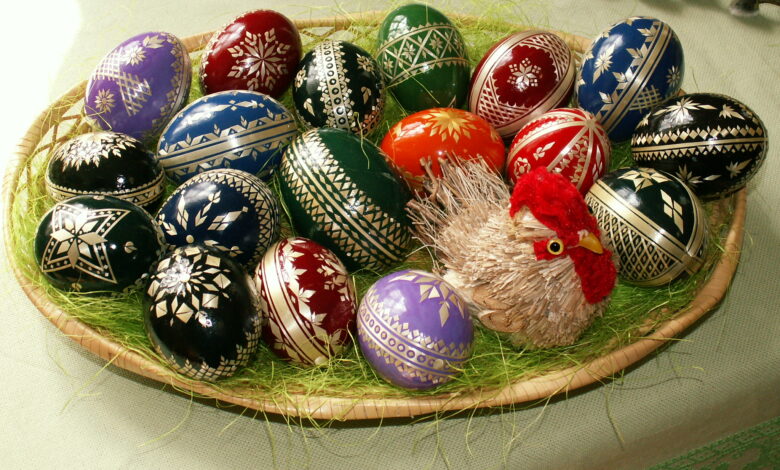
No symbol is more closely tied to easter traditions than the egg, which has represented new life and rebirth in cultures around the world for thousands of years. Early Christians in Mesopotamia stained eggs red to remember the blood of Christ, and the custom of decorating eggs spread across Europe, reaching its most elaborate form in Ukraine, where the hand-painted pysanka eggs are decorated with wax and dye in intricate patterns. In many countries, families still dye hard-boiled eggs at home, while others exchange chocolate eggs, a commercial tradition that began when Fry’s of Bristol produced the first chocolate Easter egg in 1873. The egg’s journey from ancient symbol to chocolate treat shows how traditions evolve while keeping their meaning.
Egg games are just as old as the decorated eggs themselves, and they turn a simple symbol into a source of family fun. Egg rolling, in which hard-boiled eggs are rolled down a hill or across a lawn, has been played for centuries, and the White House has hosted its famous Easter Egg Roll on its lawn since 1878. Egg tapping, or egg battles, are popular in Romania and other countries, where two players knock hard-boiled eggs together and the one whose shell stays unbroken wins. In Mexico and parts of the United States, cascarones, hollowed eggs filled with confetti, are cracked over people’s heads for luck. Each game keeps the egg at the centre of the celebration, linking the ancient symbol to the laughter of the present day.
The Easter Bunny and Egg Hunts
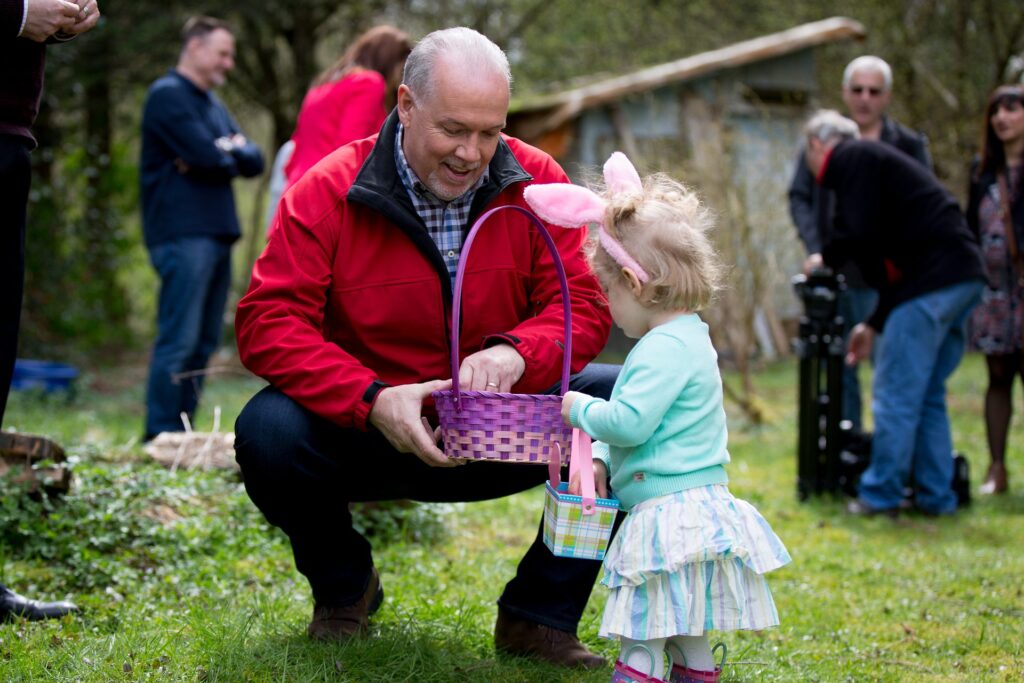
The easter traditions most children know best involve the Easter Bunny, a gift-giving character who hides eggs and baskets of treats for children to find on Easter morning. The Bunny began in Germany, where a story published in 1680 described a hare laying eggs in a garden, and German immigrants carried the custom to America in the eighteenth century. Over time, the hare became a rabbit, and the eggs became chocolate, but the heart of the tradition stayed the same: children wake to a treasure hunt, following clues or searching gardens and parks for hidden eggs. The egg hunt itself is often said to echo the search for the empty tomb, giving a playful custom a quiet connection to the Easter story.
Egg hunts come in every size, from a handful of eggs hidden around a living room to large community events in parks that draw thousands of families. Parents often colour-code eggs by age group so toddlers and older children each get a fair hunt, and many hunts now include golden eggs with special prizes. The tradition has also travelled well beyond Christian families, because the hunt is really about spring, surprise, and togetherness rather than doctrine. If you are planning a hunt, hide eggs at different heights, count them before and after, and keep a few spares for the inevitable egg that vanishes until summer. A well-planned hunt takes minutes to set up and creates memories that children remember for years.
Easter Traditions Around the World
Some of the most colourful easter traditions are found far from home, and each one tells a story about the country that keeps it. In Poland, Easter Monday is Smigus-Dyngus, or Wet Monday, when people douse each other with water in a playful ritual that recalls the baptism of Prince Mieszko in 966 and is said to bring health and marriage within the year. In Corfu, Greece, people throw clay pots out of their windows on Holy Saturday, smashing them on the street below to welcome spring and a fresh harvest. In Florence, Italy, the Scoppio del Carro, or Explosion of the Cart, sees a cart packed with fireworks ignited on Easter Sunday to ensure a good harvest for the year ahead.
Other countries celebrate in quieter but equally distinctive ways. In Norway, Easter means paaskekrim, a tradition of reading crime novels that began in 1923, when an advertisement for a thriller was mistaken for real news, and publishers have released special Easter crime stories ever since. In Sweden and Finland, children dress as Easter witches, with painted faces and headscarves, and go from house to house asking for sweets in exchange for songs and drawings. In France, the town of Haux makes a giant omelette from thousands of eggs on Easter Monday, a custom said to recall a visit by Napoleon, who enjoyed an omelette so much that he ordered one for his whole army. In Bermuda, families fly handmade kites on Good Friday, filling the sky with colour. For more customs from every corner of the globe, see this Barcelona guide to twelve Easter traditions from around the world.
Easter Food and Feasting
Food sits at the centre of easter traditions, because Easter Sunday ends the fasting of Lent and opens a season of feasting that varies enormously by region. Roast lamb is the classic Easter dish in many countries, a symbol with roots in both the Jewish Passover and Christian tradition, while other tables feature ham, roast pork, or rich breads such as Italian colomba, a dove-shaped Easter cake. In Britain, hot cross buns, spiced sweet buns marked with a cross, are eaten on Good Friday and through the Easter weekend, and in Poland the table holds babka, a tall sweet yeast cake, alongside decorated eggs and cold meats. Whatever the menu, the meal is a celebration of abundance after restraint, shared with family and friends.
Chocolate has become the most universal Easter food of all, with eggs, bunnies, and nests filling shop shelves weeks before the holiday, and children waking to baskets of sweets on Easter morning. Hot cross buns remain a favourite in Britain and across the Commonwealth, while in Greece the Easter table features tsoureki, a sweet braided bread, and magiritsa, a soup that breaks the Lenten fast. In Germany, public wells and fountains are decorated with painted eggs in the Osterbrunnen tradition, turning whole villages into displays. One safety note matters more than any recipe: chocolate is poisonous to dogs and cats, so keep Easter treats well out of reach of pets, and store baskets on high shelves where curious paws cannot reach them.
Easter Traditions for Modern Families
Modern families keep easter traditions alive by mixing old customs with new ideas, and the best celebrations are often the simplest ones. Decorating eggs together is a tradition that costs almost nothing and suits every age, from toddlers with stickers to adults attempting intricate wax designs, while an egg hunt in the garden or park gives children a morning of fresh air and excitement. Many families add a spring walk, a picnic, or a visit to a local Easter fair, and some use the holiday to start a new tradition of their own, such as a family meal with a dish from another country’s Easter table. The point is not to reproduce a perfect historical celebration, but to create a day that feels special and shared.
If you are hosting Easter this year, a little planning goes a long way: prepare egg-dyeing supplies the night before, hide the eggs early in the morning, and plan a simple menu that leaves you free to enjoy the day rather than stuck in the kitchen. Think about guests of all ages and beliefs, because Easter gatherings often include people who celebrate the religious holiday and people who simply enjoy the spring festival, and a warm welcome matters more than perfect observance. Consider adding a game, a quiz, or a craft table for children, and keep the day relaxed rather than over-scheduled. The families who enjoy Easter most are rarely the ones with the most elaborate plans, but the ones who make room for laughter, good food, and time together.
Frequently Asked Questions
When is Easter? Easter falls on the first Sunday after the first full moon following the spring equinox, which means the date moves each year, landing between late March and late April in the Western calendar. In 2026, Easter Sunday falls on April 5, while Orthodox churches, which use a different calendar, often celebrate on a different date. The shifting date is one reason Easter feels tied to spring itself, arriving as days lengthen and gardens wake. If you are planning travel or family gatherings, check the date early, because Easter weekends are popular for holidays and hotel prices often rise.
Why do we eat chocolate eggs at Easter? Chocolate eggs combine two traditions: the egg as a symbol of new life and rebirth, and the modern love of chocolate as a gift. The first commercially produced chocolate Easter egg was made by Fry’s of Bristol in 1873, and chocolate eggs have grown into a huge seasonal industry since then. Before chocolate, families decorated real eggs, and many still do, with painted pysanka eggs from Ukraine among the most beautiful examples. Chocolate eggs are simply the sweetest version of an ancient symbol, and they make the holiday especially exciting for children.
What is Smigus-Dyngus? Smigus-Dyngus, also called Wet Monday, is a Polish Easter Monday tradition in which people playfully drench each other with water, using buckets, bottles, or water pistols. The custom is linked to the baptism of Prince Mieszko in 966 and is said to bring health, good fortune, and even marriage within the year to those who get soaked. Today it is mostly a day of fun, with families and friends chasing each other through gardens and streets. If you are visiting Poland at Easter, expect to get wet, and wear clothes you do not mind soaking.
Is Easter only for Christians? Easter is a Christian holiday at its heart, commemorating the resurrection of Jesus, and church services remain central for many believers. However, many of its customs, such as egg hunts, chocolate, spring feasts, and family gatherings, are enjoyed by people of all faiths and none, because they celebrate spring, renewal, and togetherness. In many countries, Easter is also a public holiday and a school break, which makes it a natural time for travel and family time. However you celebrate it, the holiday works best as an invitation: to gather, to share food, and to welcome spring together.
Final Thoughts
Easter traditions endure because they speak to something universal: the return of light after winter, the joy of new life, and the pleasure of gathering with the people we love. Whether the celebration is a solemn sunrise service, a water fight in Poland, a pot-smashing in Corfu, or a simple egg hunt in the garden, each custom carries the same message of renewal. The holiday’s long history, layered with ancient spring festivals, Christian faith, and folk imagination, is what gives it such variety and such staying power. Few holidays manage to be at once so sacred and so playful, and that is part of their charm. For the full background on these customs, see the Wikipedia overview of Easter traditions.
If you take one thing from this guide, let it be an invitation to celebrate Easter in your own way this year. Try a new custom, whether that is decorating eggs in the Ukrainian style, cooking a dish from another country’s Easter table, or simply taking a spring walk with family. Share the day generously, keep chocolate away from pets, and leave room for laughter. Traditions survive because people keep them alive, and every family that hunts eggs, bakes hot cross buns, or gathers for an Easter meal is adding a small new chapter to a story that is already thousands of years old.
