What Is the Tesla Model Y
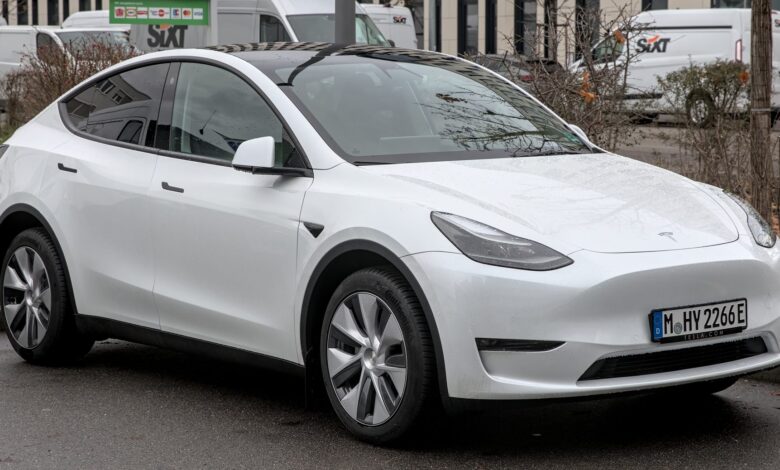
The tesla model y is a battery-electric compact crossover SUV that Tesla has produced since 2020, and it has grown into the best-selling electric vehicle of all time, with more than 2.16 million units sold worldwide. It was presented in March 2019 as Tesla’s fifth production model, and production began at the Fremont factory in California in January 2020, before expanding to Shanghai, Austin in Texas, and Berlin in Germany. The Model Y shares roughly 76 percent of its parts with the smaller Model 3 sedan, yet it offers the raised seating position, taller roofline, and extra cargo space that crossover buyers want. In 2023, it even outsold the Toyota Corolla to become the best-selling car in the world.
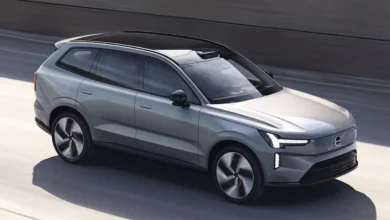
A refreshed version arrived in January 2025, bringing a new look with full-width LED light bars, a quieter cabin, ventilated seats, and a second touchscreen for rear passengers, while a longer six-seat Model Y L followed later in the year for buyers who need a third row. The appeal is easy to understand: the car combines SUV practicality with the low running costs of an electric drivetrain, and Tesla’s software updates keep adding features long after purchase. The electric SUV market has grown crowded since 2020, with rivals such as the Volvo EX90 now chasing the same family buyers, yet the Model Y still sets the benchmark for range, charging, and value. The rest of this guide explains what you actually get for your money. For the complete specifications and production history, see the full Model Y reference on Wikipedia.
Tesla Model Y Price and Trims
A tesla model y in the United States is sold in five main versions, with prices starting at 39,990 dollars for the Standard rear-wheel-drive model and rising to 57,490 dollars for the Performance all-wheel-drive version. In between sit the Standard all-wheel-drive at 41,990 dollars, the Premium rear-wheel-drive at 44,990 dollars, and the Premium all-wheel-drive at 48,990 dollars, while buyers in the United Kingdom see a broadly similar ladder starting from 41,990 pounds. The Standard models keep things simpler inside and out to hit a lower price, whereas Premium versions add a glass roof, a rear touchscreen, an upgraded sound system, and fancier suspension. Choosing between them comes down to how much range and equipment you genuinely need.
Prices move often, because Tesla adjusts its lineup and pricing several times a year, so the figures here are a snapshot rather than a permanent promise, and you should always confirm the latest numbers before ordering. Incentives can change the picture significantly: qualifying buyers in the United States have been able to claim a federal tax credit worth up to 7,500 dollars, which can bring the effective price of a Premium rear-wheel-drive car below 38,000 dollars. Running costs also matter as much as the sticker price, because electricity is usually far cheaper per mile than petrol, and electric cars need fewer routine services, with no oil changes, no exhaust system, and far less brake wear thanks to regenerative braking. When you add those savings over several years of ownership, the total cost can beat cheaper petrol rivals.
Range, Battery and Real-World Efficiency
Range is where the tesla model y earns much of its reputation, because the longest-range versions travel more than 350 miles on a single charge according to official EPA estimates. The Premium rear-wheel-drive model leads the lineup at around 357 miles, while the Standard rear-wheel-drive manages about 321 miles, the Premium all-wheel-drive around 327 miles, and the Performance version roughly 277 to 306 miles depending on wheels and testing. Those figures assume gentle driving in mild weather, so expect less in winter, at motorway speeds, or with a loaded car, since cold batteries and high speeds both eat into range. Even so, most owners find that a real-world range of 250 to 320 miles covers a full week of commuting and school runs without a second thought.
The battery itself is a lithium-ion pack of roughly 60 to 81 kilowatt-hours depending on version, with the smaller standard-range cars using cheaper lithium-iron-phosphate chemistry and the long-range cars using nickel-based cells. Efficiency is another quiet strength: the Model Y squeezes roughly three to four miles from every kilowatt-hour, which keeps charging bills low and means a smaller battery still goes a long way. Heat pumps, a slippery aerodynamic shape, and low-rolling-resistance tyres all help, and the car’s software constantly manages temperature and energy use in the background. If you charge at home overnight, you will wake up to a full battery most mornings, which makes the official range figure matter far less than it first appears.
Charging: Home, Superchargers and Road Trips
Charging is the part of electric ownership that worries new buyers most, yet the tesla model y makes it unusually painless thanks to the Supercharger network, one of the largest fast-charging networks in the world with tens of thousands of stalls. The car can charge at up to 250 kilowatts on a Supercharger, adding roughly 144 to 182 miles of range in about fifteen minutes, which is barely longer than a coffee stop. A ten-to-eighty percent charge typically takes under half an hour, and the car’s navigation automatically routes you through chargers on long journeys, pre-heating the battery on the way so you arrive ready for the fastest possible charge. For most owners, public charging is only an occasional affair rather than a daily chore.
Home charging is where the car makes the most sense, because a 240-volt wall outlet or a dedicated home charger can refill the battery overnight in roughly ten hours, at electricity rates far below the cost of petrol. Many owners spend less on a month of home charging than a single tank of fuel used to cost, and they never visit a petrol station again. If you cannot charge at home, the picture is trickier: public charging costs more, and relying on it requires planning around charger availability and pricing. Before buying, it is worth checking your parking situation, your electricity tariff, and the chargers near your home and workplace, because those three facts shape the ownership experience more than any specification on paper.
Interior, Technology and Everyday Comfort
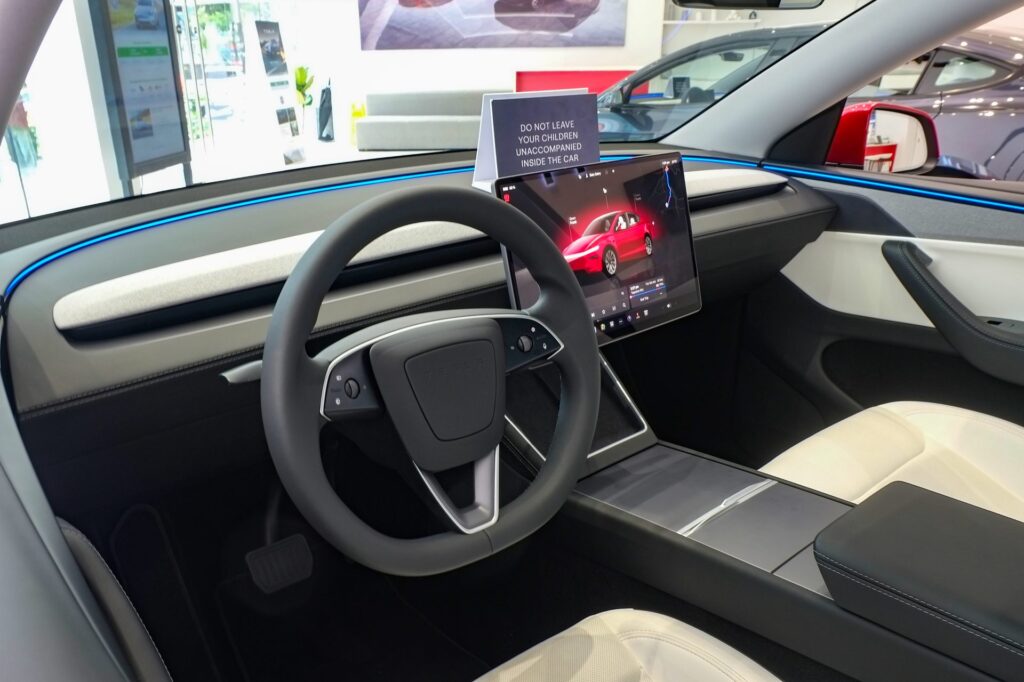
Step inside the tesla model y and the first thing you notice is how little there is: a single large central touchscreen controls almost everything, from navigation and music to mirrors and climate, while a clean dashboard stretches across the cabin without a single button in sight. The 2025 refresh added a second screen for rear passengers, ventilated front seats, better sound insulation that cuts cabin noise by around a fifth, and a redesigned suspension that smooths out the firm ride older cars were criticised for. There is no Apple CarPlay or Android Auto, because Tesla runs its own software ecosystem, so you use Tesla’s navigation, apps, and voice controls instead. Some drivers love the simplicity, while others miss their phone’s familiar interface, so a test drive is essential.
Space is a genuine strength: five adults fit comfortably, the panoramic glass roof makes the cabin feel bright and airy, and the flat floor leaves generous legroom for rear passengers. Cargo space is generous too, with a deep rear boot, a front trunk under the bonnet, and split-folding rear seats that swallow furniture, luggage, or a week’s shopping without complaint. The seats fold nearly flat, which turns the car into a surprisingly capable load-lugger for a family holiday or a trip to the garden centre. Software is the other half of the story: over-the-air updates add features, fix bugs, and improve performance over time, so the car you own in three years may feel noticeably better than the one you bought.
Safety, Reliability and Ownership Costs
Safety is one of the strongest reasons to consider this car, because independent testers have given it top marks in crash testing, including a five-star overall rating from the American NHTSA and a Top Safety Pick+ award from the IIHS. The low-mounted battery pack keeps the centre of gravity close to the ground, which makes the car stable in corners and very hard to roll over, while the strong passenger cell and long crumple zones protect occupants in a crash. Standard driver-assistance features include automatic emergency braking, lane keeping, blind-spot monitoring, and adaptive cruise control, and Tesla’s Autopilot system can steer, accelerate, and brake on motorways. Full Self-Driving is offered as a paid extra in some markets, although drivers must stay attentive and ready to take over at all times.
Running costs are where electric cars quietly win: electricity is cheaper than petrol per mile, servicing is simpler because there are far fewer moving parts, and brake pads last far longer thanks to regenerative braking, which slows the car by recovering energy instead of wearing the brakes. Tyres are the main consumable to watch, because the car’s weight and instant torque can wear them faster than a petrol car’s, and insurance can be pricier for some drivers, particularly younger ones. Reliability has improved steadily over the years, although early cars had occasional complaints about panel gaps and paint finish, so it is worth inspecting a new car carefully before accepting delivery. Overall, most owners report that the car simply gets on with the job, quietly and cheaply, with little drama between services.
Tesla Model Y vs the Competition
The tesla model y no longer has the electric crossover market to itself, because nearly every major manufacturer now sells a rival, from the Hyundai Ioniq 5 and Kia EV6 to the Ford Mustang Mach-E and Volkswagen ID.4. Many rivals offer plusher interiors, traditional buttons, and dealer networks with local service centres, which some buyers prefer, and a few undercut the Model Y on price. Where the Tesla still leads is the complete package: longer real-world range than most rivals, the fastest and most reliable charging network, and software that updates and improves over time. For buyers who road-trip often or lack home charging, that charging advantage alone can decide the contest, because a car is only as good as the network that keeps it moving.
Premium rivals such as the Volvo EX90, BMW iX, and Audi Q6 e-tron offer more luxury, quieter cabins, and more traditional interiors, but they cost far more and still cannot match Tesla’s charging network in most regions. Cheaper rivals can win on value for drivers who rarely leave their city, since a smaller battery and slower charging matter little on short daily trips. The honest answer is that there is no single best electric SUV any more, only the best one for your driving pattern, your budget, and your charging situation. Test-driving two or three rivals back to back is the fastest way to find out which trade-offs you are happy to live with, because specifications on paper rarely tell the full story about how a car feels every day.
Is the Tesla Model Y Worth Buying
So, is the tesla model y worth buying in 2026? For most buyers, the answer is yes, because it remains the most complete electric family car at its price, combining long range, fast charging, strong safety, generous space, and low running costs in a single package. The Premium rear-wheel-drive version is the sweet spot for many people, offering the longest range and the best equipment balance, while the Performance version suits drivers who want sports-car acceleration without giving up family practicality. Buyers who can charge at home and cover a mix of commuting and longer trips will get the most from it, and the car rewards them with running costs that petrol rivals simply cannot match.
There are fair reasons to hesitate: the minimalist interior divides opinion, the ride is firmer than some rivals, and Tesla’s build quality, while much improved, still rewards a careful inspection at delivery. If you regularly tow heavy trailers, need seven seats, or want a genuinely luxurious cabin, other cars may suit you better. But judged as a complete family car, the Model Y still sets the standard that rivals are measured against, and its combination of range, charging, software, and value is hard to beat. If you are considering one, book a test drive, check your home-charging options, and confirm the latest pricing and incentives, because those three steps will tell you more than any review ever could.
Frequently Asked Questions
How much does the Model Y cost? Prices in the United States start at about 39,990 dollars for the Standard rear-wheel-drive version and rise to about 57,490 dollars for the Performance all-wheel-drive model, with the popular Premium rear-wheel-drive sitting near 44,990 dollars. In the United Kingdom, prices start at about 41,990 pounds, and the lineup follows a similar ladder of Standard and Premium versions. Tesla changes prices fairly often, so treat these figures as a guide rather than a fixed promise, and check the latest numbers before ordering. Qualifying buyers may also be able to claim incentives worth up to 7,500 dollars, which can reduce the effective price significantly.
How far can the Model Y go on one charge? Official EPA estimates range from about 277 miles for the Performance version to about 357 miles for the Premium rear-wheel-drive model, with the other versions sitting between those two figures. Real-world range depends on weather, speed, load, and driving style, and cold winter weather can reduce it noticeably. Most owners find that 250 to 320 miles in everyday use is realistic, which covers commuting and family trips without worry. Home charging overnight means most drivers start each day with a full battery, so the maximum range figure matters mainly on longer journeys.
How long does charging take? On a Tesla Supercharger, the car can add roughly 144 to 182 miles of range in about fifteen minutes, and a ten-to-eighty percent charge typically takes under half an hour. At home, a 240-volt charger refills the battery overnight in roughly ten hours, which suits most owners perfectly. Charging speed depends on the battery’s temperature, its state of charge, and the charger’s power, so the car pre-heats the battery on the way to a Supercharger for the fastest possible session. For most owners, home charging covers daily needs and public charging is only for road trips.
Does the Model Y have seven seats? Most versions seat five people, and an optional third row was offered on earlier cars in the United States for a seven-passenger layout, although that option did not return with the 2025 refresh. Buyers who need six or seven seats should look at the longer Model Y L, a six-seat long-wheelbase version introduced in 2025, or consider larger electric SUVs such as the Volvo EX90. For most families, five seats plus generous cargo space is plenty, and the flat floor and panoramic roof make the cabin feel roomy. If you regularly carry six or seven people, a bigger three-row SUV will serve you better.
Final Thoughts
The tesla model y earned its place as the world’s best-selling car by doing the simple things brilliantly: long range, fast charging, a spacious cabin, strong safety, and running costs that embarrass petrol rivals. It is not perfect, and its minimalist interior and firm ride will not suit everyone, but as a complete family car it remains remarkably hard to beat. The 2025 refresh fixed many of the old complaints, and the charging network remains a genuine advantage that no rival has yet matched. If you want one car that handles commuting, school runs, and long road trips without fuss, this one deserves a place at the top of your shortlist.
Before you buy, do the three things that matter most: book a test drive in the version you are considering, confirm your home-charging setup and electricity tariff, and check the latest prices and incentives in your country. Those answers will tell you whether this car fits your life better than any specification sheet can. The electric car market keeps improving every year, and rivals are closing the gap, yet the Model Y still offers the most complete package for the money. If it fits your budget and your driving pattern, it is a car you are likely to enjoy for many years to come.