








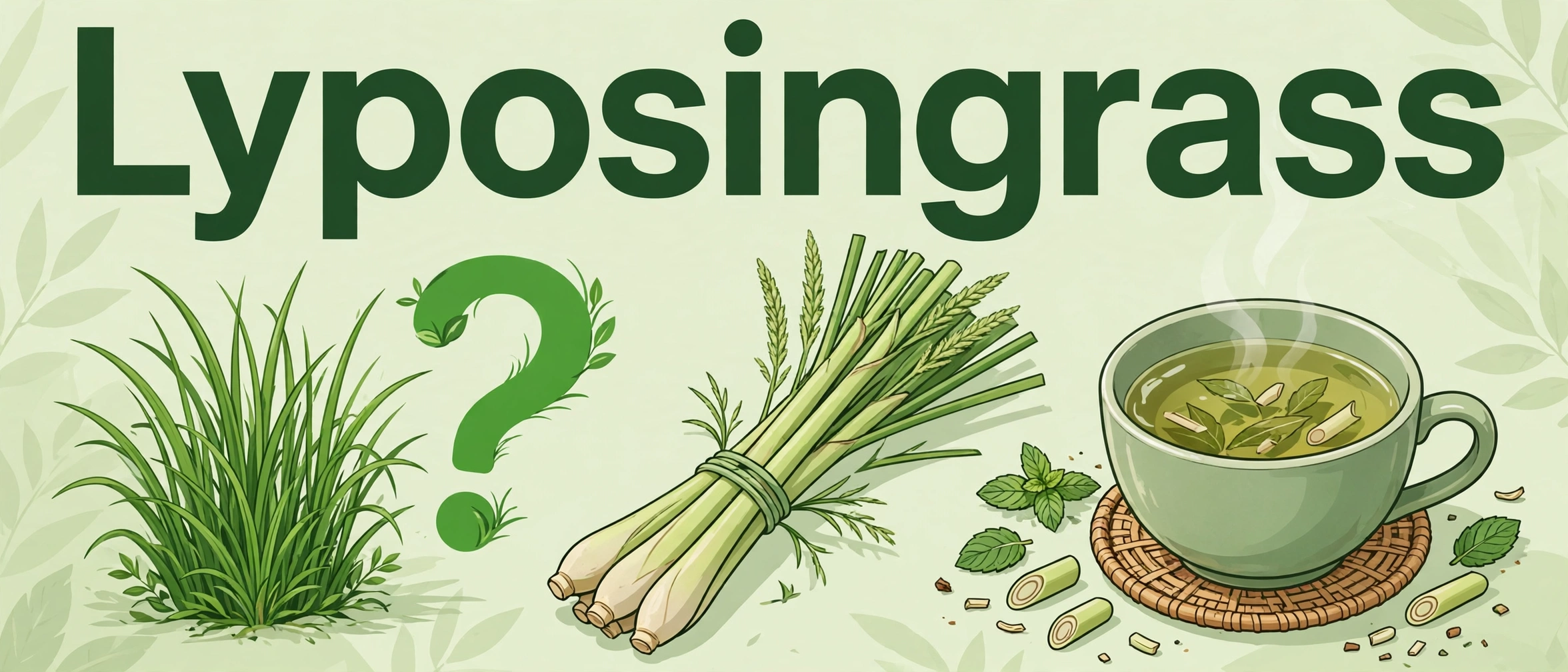
The word lyposingrass has started to appear in wellness blogs, supplement listings, and social media posts, usually beside claims about fat burning, digestion, and immunity. It sounds like the name of a herb. The name does not behave like a normal plant name when it is checked against the places where plant names are settled, and that gap is the whole story here.
What Is It?
In the simplest terms, the word is an internet-born name for a supposed wellness grass. Blogs that use it describe a tropical grass, a herbal powder, a tea, or a supplement blend, and they usually link lyposingrass to weight management and general health. The descriptions vary so much from site to site that they cannot all be describing the same thing, which is the first warning sign for any reader.
The name is most plausibly a compound of “lypo”, pointing to lipid and fat, and “grass”, which gives it a natural, herbal sound.
Is It A Real Plant?
The short answer is that there is no verified evidence that lyposingrass is a real plant species. Searches of the main botanical records return nothing for this exact name. Kew Plants of the World Online, the standard reference for accepted plant names, has no entry for lyposingrass. The USDA Plants Database and NCBI records also return nothing for it.
Botanists accept a name only when a plant has been formally described and recorded, with a type specimen and a place in a family. For lyposingrass, none of that exists: no accepted scientific name, no taxonomic authority, no family, no native range, and no herbarium record have been found.
Vs Lemongrass: Are They The Same Thing?
The confusion with lemongrass is the most common mistake in this subject, so it needs a clear answer. Lemongrass is a real plant with a settled identity. Its accepted scientific name is Cymbopogon citratus, Kew Plants of the World Online accepts that name, and its native range is southern India and Sri Lanka.
Several blogs claim that lyposingrass is simply an online name for lemongrass, and they then borrow lemongrass evidence and present it as evidence for the new term. That link has not been proven, and no botanical record, taxonomic note, or authoritative source treats the two names as interchangeable. The two must therefore be kept separate: lemongrass has a real record and real research behind it, while lyposingrass has none of those things, so evidence about lemongrass cannot be transferred to it.
What Different Websites Claim About It
The pages that rank for this term do not agree with each other, and the disagreement itself is useful evidence. One site calls lyposingrass a novel botanical compound for fat metabolism. Others call it a tropical grass, a superfood, or a gardening plant. The same word is used for a superfood, a supplement, a garden grass, and a fat-burning aid, which is not how a single real plant is normally described.
The table below collects the most repeated claims about lyposingrass and checks each one against what could actually be verified.
| Claim | Source type | Verified? | What is actually verified |
|---|---|---|---|
| Separate plant species | Wellness blogs | No evidence found | No entry in Kew, USDA Plants, or NCBI |
| Cymbopogon citratus | Wellness blogs | No | Cymbopogon citratus is real lemongrass, but the link is not proven |
| Southeast Asian origin | Wellness blogs | No evidence found | No native range recorded; claim borrowed from lemongrass |
| Fat-burning / weight loss | Supplement blogs | No | No named study or verifiable result found |
| Digestion and immunity benefits | Wellness blogs | No evidence found | No clinical evidence tied to this name found |
| Safe for daily use | Supplement blogs | No | No safety record or standard preparation exists |
Does It Help With Weight Loss?
The short answer is that there is no strong proof that lyposingrass burns body fat or causes weight loss, and the specific numbers quoted online fall apart when they are examined.
Other pages give nutrition figures per hundred grams for it, but those figures are unattributed and appear to have been borrowed from lemongrass. Weight loss itself is a slow, ordinary process, driven by food, movement, sleep, and health conditions, not by a single tea or powder.
How It Is Sold And Used Online
Online, the name is attached to the usual wellness formats: tea, powder, capsules, and extracts. Some listings present lyposingrass as a single herb, while others present it as a blend.
The practical habit is to read the label before buying anything sold as lyposingrass. Look for the actual botanical name in Latin, the full ingredients list, the country of origin, and the name of the seller. If the label gives only the marketing name and a list of benefits, that is not enough information to judge what is inside the packet.
Is It Safe?
Safety is the part of this subject where caution matters most, and where the least is actually known. Because there is no standard plant, no standard preparation, and no safety record tied to this exact name, there is no basis for saying that lyposingrass is safe for daily use. “Natural” is not the same as “proven safe”, and a grass sold online is not automatically harmless because it comes from a plant.
General caution applies to the groups who are usually warned about herbal products. People who are pregnant, people who take medication such as diuretics or blood-pressure drugs, and people with allergies to grasses or herbal products should be especially careful, and should speak to a clinician before using a product they cannot identify.
Lyposingrass: Hype Or Hope?
The honest bottom line is that the name is mostly hype built around a hope. The hope is understandable: a natural grass that helps with weight, digestion, and immunity would be welcome. The hype is the problem, because it presents that hope as a discovery, with numbers, benefits, and a plant that cannot be found in any botanical record.
The useful lesson is not about one word. It is about how to read wellness claims online. A real plant can be checked in a database, a real study can be named and found, and a real product can list its ingredients. When none of those checks pass, claims about lyposingrass have not earned belief, however often they are repeated. For a different example of a term that needs the same careful checking, see Bodenxt Explained: Sweden Green Steel Town Transformation.
Frequently Asked Questions
What is lyposingrass?
It is an internet-born wellness term for a supposed grass linked to fat burning, digestion, and immunity. It is not a verified plant species, and no botanical record settles what it refers to.
Is lyposingrass a real plant?
No verified evidence shows that it is a real plant species. Kew, the USDA Plants Database, and NCBI records have no entry for this exact name, and no scientific name, family, native range, or herbarium record has been found for it.
Is lyposingrass the same as lemongrass?
Some blogs treat the two names as the same, but that link has not been proven. Lemongrass is a real species, Cymbopogon citratus, native to southern India and Sri Lanka, while the newer term has no botanical record.
Does lyposingrass help with weight loss?
There is no strong proof that it burns body fat or causes weight loss. The study figures quoted online are unnamed and unverifiable, and weight change depends on food, movement, sleep, and health, not on a single tea or powder.
Is lyposingrass safe to use?
There is no safety record tied to this exact name, so it cannot be called safe for daily use. People who are pregnant, take medication such as diuretics or blood-pressure drugs, or have allergies to grasses should be especially careful and speak to a clinician first.
How is lyposingrass used — tea, powder, or capsules?
It is sold online as tea, powder, capsules, and extracts, sometimes as a single herb and sometimes as a blend. Before buying, check the label for the actual botanical name and the full ingredients list.




One thought on “Lyposingrass: Real Plant Or Just An Online Wellness Trend?”