









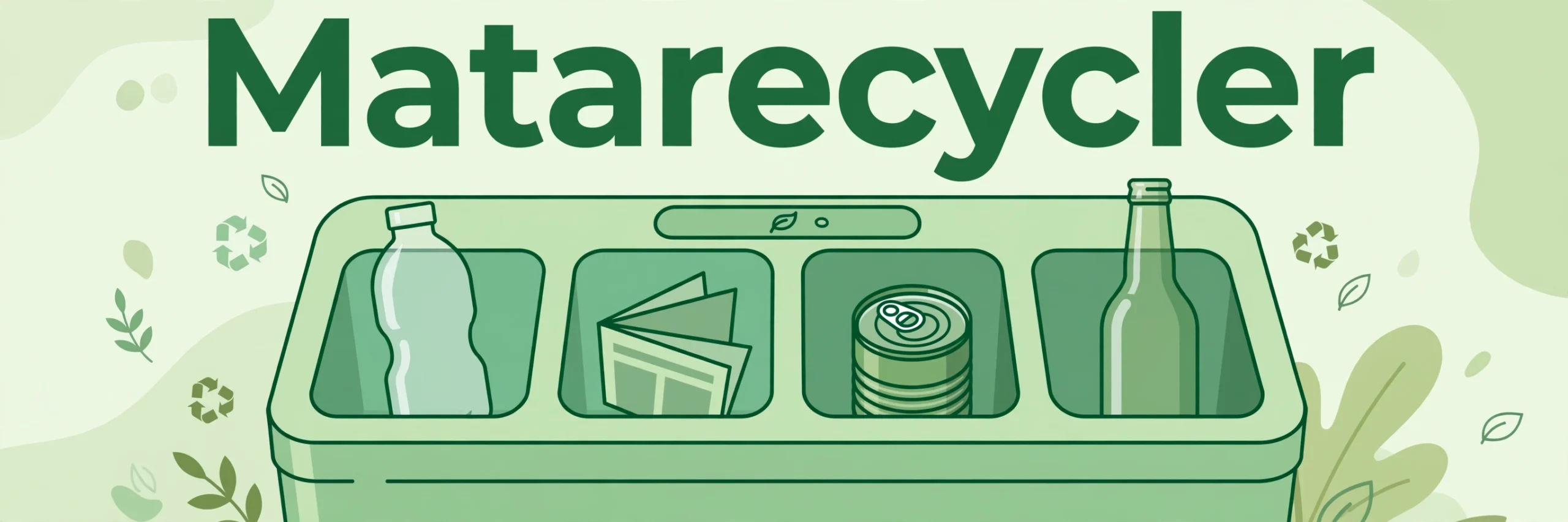
If you have seen the word matarecycler in a search result or a social media post, you are not alone in wondering what it means. The name has started to appear in online guides about recycling and sustainability, usually beside words like smart and AI-powered. This guide explains what matarecycler is said to be, what can be verified, and what cannot, so you can judge any page that uses the term for yourself.
What Is It?
In short, the name describes an idea rather than a proven product. Blogs describe it as a smart recycling system that uses artificial intelligence to sort waste more accurately than people can by hand. That description is easy to repeat, and many sites do repeat it in very similar words, but repetition is not the same as proof.
A website at matarecycler.com exists, described by secondary sources as an online recycling and sustainability education platform. That is a thin fact: a website does not prove a machine exists, a company sells one, or any facility uses one. The founder, headquarters, price, and customer list are not publicly identified in any reliable source checked for this article.
Blogs say matarecycler would sort plastics, paper, metals, glass, and electronic waste, using machine learning, computer vision, sensors, smart bins, and dashboards to identify materials and cut contamination.
In those descriptions, matarecycler is aimed at households, businesses, municipalities, and recycling facilities, as a step toward a circular economy. The honest position is simpler: the term is circulating online, but it should be treated as an unverified concept, not as a product you can buy.
How Does It Work?
The blogs say matarecycler would start by scanning waste. In a smart bin or on a sorting line, cameras and sensors would look at shape, colour, and material, and then decide what each item is made of.
Next, matarecycler would use artificial intelligence to identify each item. A trained model would compare the scanned item with examples it has learned from, and then label it as plastic, paper, metal, glass, or electronic waste.
Finally, matarecycler would track the results. Each item would go to the right stream, and a dashboard would show how much of each material had been collected and how clean each stream was. The difficulty is proving that one exists for this system and that its numbers come from measurements rather than from a marketing page.
Smart Recycling Vs Traditional Recycling
Traditional recycling depends on people and simple machines. Households sort waste into bins, and facilities use manual sorting, magnets, screens, and air jets. It works, but it is imperfect: wrong items enter the wrong bins, and wet or dirty materials contaminate clean ones.
The online description of matarecycler promises to close those gaps with sensors and software. The table below compares the two, framing every claim about the new idea as a description found online, not as an independently verified fact. That is why matarecycler is best read as a promise, not as a proven result.
| Feature | Traditional Recycling | As Described Online |
|---|---|---|
| Sorting method | Manual sorting, magnets, screens, and air jets | AI, computer vision, and sensors, as described online, not independently verified |
| Sorting accuracy | Depends on people and on the condition of the waste | Said to be higher, as described online, not independently verified |
| Contamination | Common, from wrong items and dirty materials | Said to be lower, as described online, not independently verified |
| Data tracking | Limited, often based on weight and periodic audits | Dashboards and live reports, as described online, not independently verified |
| User guidance | Labels, leaflets, and council guidance | Smart bins and app-style prompts, as described online, not independently verified |
| Cost and setup | Established collection and facility costs | No public price or setup details, as described online, not independently verified |
Benefits As Described Online
Supporters say matarecycler would sort faster and more accurately than a tired human sorter. A machine that identified materials at a glance would make fewer mistakes, which matters most for plastics that are hardest to tell apart.
They also say matarecycler would cut contamination, one of the biggest problems in recycling, because a single wrong item can spoil a load. A system that caught mistakes before they entered a stream would protect the value of the materials sorted correctly.
Limitations And Challenges To Know Before You Believe The Claims
The first problem for matarecycler is the absence of evidence. There is no verified product to inspect, no price to compare, and no named town, facility, or client to contact. A reader who wants to buy, install, or invest will find no public route to do so.
A second problem for matarecycler is dirty and damaged waste. Dirty containers and multi-layer packaging that combines plastic, foil, and paper are hard for sensors to read and machines to separate, and the online descriptions rarely say what happens when the system cannot identify an item.
Real Smart Recycling Technology That Actually Exists
Real AI sorting does exist. Companies such as AMP Robotics, Machinex, and Glacier operate sorting systems using cameras, machine learning, and robotic or air-based sorting in real recycling facilities. Their systems are named, and their installations can be identified.
Unlike this name, real systems can be checked: find the company, read its own descriptions, and look for independent coverage of its installations. Ask three questions of any smart recycling claim: who makes it, where is it running, and who has measured it? A name, a place, and a published result mean the claim is worth reading further.
How To Use The Idea In Everyday Recycling
The matarecycler idea can still help as a checklist. Before you buy or trust any product under a name like this one, ask for the company name, the model name, the price, and a facility or town where it is running. A genuine supplier will answer. A page that cannot is not selling a product; it is selling a story.
That same habit of checking before trusting applies to other unfamiliar terms as well. For a clear example of how to separate a real meaning from an invented one, see Casance Explained: Meaning, Origins, Uses And Key Facts, which walks through a term with several unrelated uses and shows how to tell them apart.
Frequently Asked Questions
What is matarecycler?
It is a name circulating online for a smart, AI-powered recycling system as described by blogs, not a verified company or product. No founder, price, or installation has been publicly verified.
Is matarecycler a real company?
No verified company has been established under this name. A website exists, described as an online recycling education platform, but that does not prove a company sells a sorting machine. Until a company, a product, and a customer can be named, treat it as an unverified concept.
How does matarecycler work?
It would scan waste with cameras and sensors, identify materials with artificial intelligence, and sort them into streams while a dashboard tracked the results. Those steps describe real AI sorting in general, but they have not been verified for this name.
What are the benefits of matarecycler?
Faster and more accurate sorting, less contamination, and better data for households, businesses, and cities. Those are plausible benefits for a working AI sorting system, but they are blog claims, not measured results for a verified product.
Is matarecycler different from traditional recycling?
Yes, in the way it is described. Traditional recycling relies on people and simple mechanical sorting, while the online description promises sensor and software sorting with live data. The difference is real as an idea, but the promised advantage has not been demonstrated with public evidence for this name.
Can I buy a matarecycler system?
No public route to buy one has been verified. There is no price, model range, supplier, or installation to contact, so do not pay for, invest in, or partner with anything sold under this name until those details can be checked against a named company and a real installation.




One thought on “Matarecycler Explained: Smart Recycling Guide For Beginners”