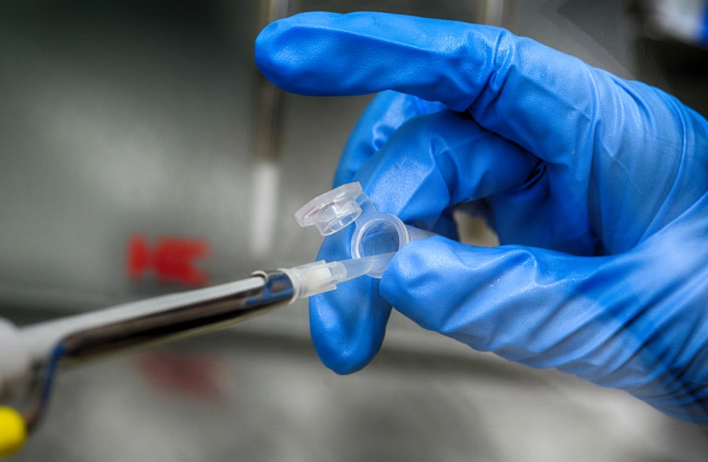









Consistency is an important consideration in laboratory research, particularly when working with aqueous reagents and solutions. Selecting an appropriate reagent involves understanding its composition, intended application and storage requirements. Researchers exploring specialised laboratory supplies may come across products described as 3 ml bacteriostatic water, making it useful to understand the characteristics that distinguish bacteriostatic water from other water-based laboratory materials.
Bacteriostatic water is purified water containing an antimicrobial preservative, commonly benzyl alcohol. The preservative helps inhibit the growth of certain microorganisms under specified conditions. This distinguishes it from ordinary purified water, which does not contain an added antimicrobial component. Its composition makes it a specialised reagent that qualified researchers may encounter in laboratory settings, depending on the requirements of their work.
What Makes Bacteriostatic Water Different?
The primary distinction lies in the addition of a preservative. While purified water provides an aqueous base for various laboratory processes, bacteriostatic formulations contain an additional ingredient intended to restrict microbial growth. This difference is important when evaluating reagents for research applications.
Benzyl alcohol is one of the preservatives used in these formulations. Its presence and concentration influence the properties of the resulting solution. Researchers should therefore review product specifications rather than assume that all bacteriostatic water formulations have identical compositions.
Factors to Consider When Selecting Laboratory Water
1. Composition and Concentration
Understanding the composition of a reagent is essential before incorporating it into a research protocol. Researchers should examine the listed ingredients, preservative concentration and available technical documentation. These details help establish whether a particular formulation is appropriate for the intended laboratory application.
2. Packaging and Storage
Packaging is another practical consideration. Different container sizes can support different inventory and handling requirements. Smaller formats may be convenient for controlled laboratory workflows, while larger containers can suit applications with different material requirements. Regardless of format, researchers should follow the manufacturer’s stated storage conditions and handling instructions.
3. Quality Documentation
Reliable documentation supports informed reagent selection. A Certificate of Analysis (COA), where available, provides relevant information about an individual production lot. Reviewing lot-specific documentation allows researchers to examine the stated product characteristics and testing information before making a purchasing decision.
Why Informed Reagent Selection Matters
Laboratory research depends on careful material selection, consistent procedures and appropriate documentation. Even seemingly straightforward reagents deserve attention because differences in composition can influence their suitability for particular experimental requirements.
Rather than selecting laboratory water based solely on packaging or product descriptions, researchers should consider formulation details, documentation, storage requirements and intended research applications together. A methodical approach helps maintain better control over laboratory materials and supports more organised research workflows.
Ultimately, understanding the differences between purified water and preservative-containing formulations enables researchers to make more informed decisions when sourcing specialised laboratory reagents.