








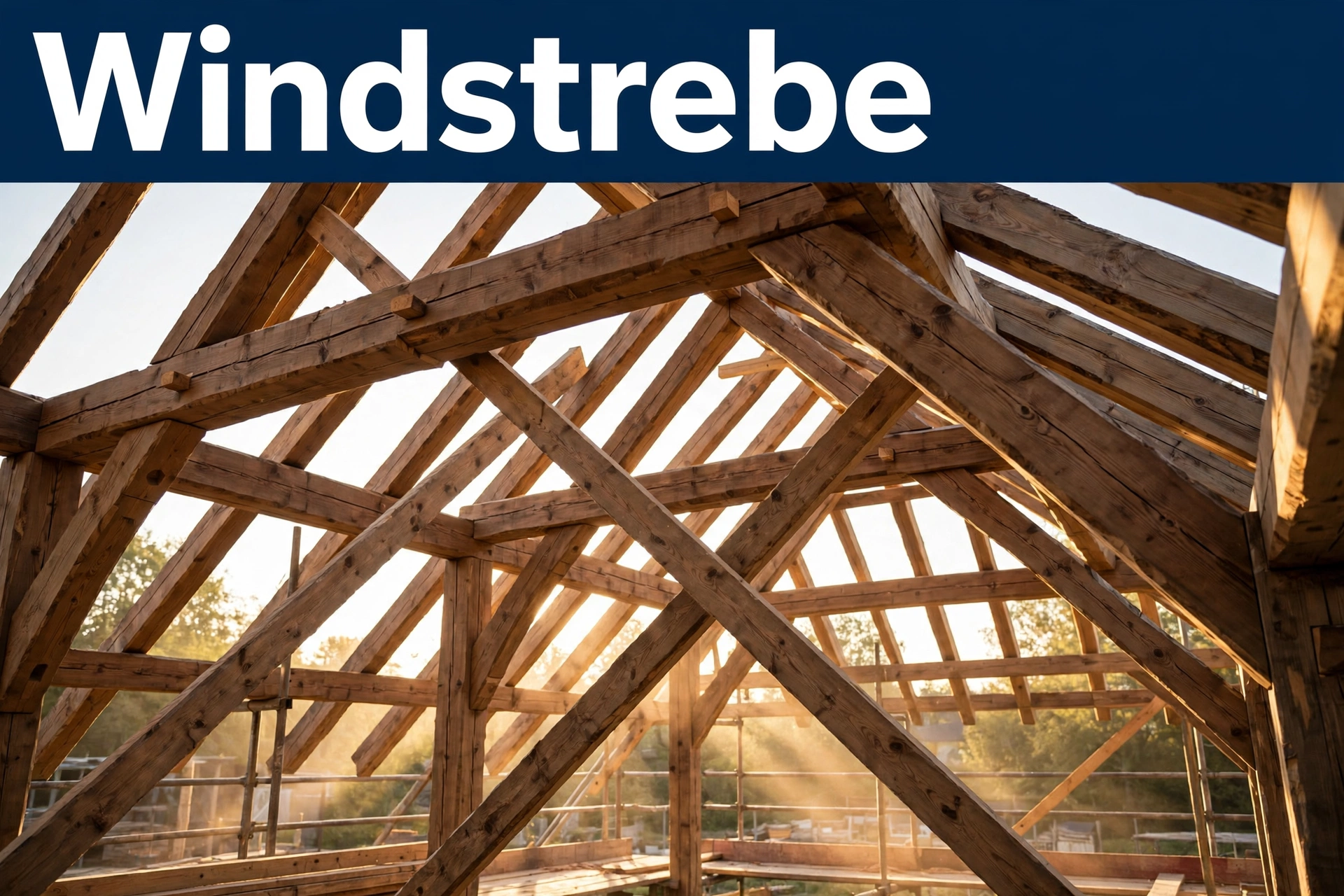
Windstrebe is the German word for a wind brace, a diagonal member that helps a roof or timber frame resist sideways movement caused by wind. In short, it is the small diagonal piece that stops a building from leaning.
When people search for the term, they usually want a simple answer. They may have seen the word in a roof guide, a garden shed kit, or a timber frame plan, and they want to know what the part is and why it matters. This article answers those questions in plain language. It is general educational material about building construction, not professional engineering advice, and any structural change should be checked by a qualified professional.
What Is a Windstrebe?
A windstrebe is a diagonal structural brace, usually timber, that stabilises a roof or timber frame against lateral forces such as wind. It is installed at an angle between two members of the frame, and it works by adding a diagonal line that stops the frame from folding sideways. Without that diagonal, a rectangular frame can rack, which means it leans out of square under a sideways push.
The word itself is plain enough. German dictionaries, LEO among them, translate the word simply as wind brace. The plural form is windstreben, for two or more braces. In old German engineering references, the plural describes braces that work against wind pressure in timber-framed walls and roof structures.
Where Does the Word Come From?
The German term combines two words. Wind means wind, and Strebe means a brace, strut, or supporting member. Put together, they describe a member intended to help a structure resist lateral movement. The usual English translation is wind brace or diagonal wind brace, and German-English technical dictionaries list exactly that translation.
It is a feminine noun in German, die Windstrebe, and it belongs to the traditional vocabulary of timber construction. The craft that cuts and raises these frames is the work of the Zimmermann, the German word for a carpenter in timber construction, learned through apprenticeship. A windstrebe is one of the quiet parts of that craft: it is rarely seen once a building is finished, but the frame depends on it.
How Does a Windstrebe Work?
The brace works by turning a sideways push into a force the frame can carry. Wind pressing on a gable end tries to push the wall and roof out of square. A diagonal brace resists that movement because a triangle is far stiffer than a rectangle. The brace carries the load down into the main frame and then into the foundations, instead of letting the joints take the strain alone.
A pair of diagonals forming an X is sometimes called an Andreaskreuz in German timber construction. The X resists wind from both directions and is the stiffer option in most frames.
Windstrebe, Windrispe, and Windrispenband: What Is the Difference?
German roof terminology can be confusing because the names overlap, so a short comparison helps. A windstrebe is the broader term for a wind brace, an inclined structural member, often timber, in a roof or frame. A windrispe is also translated as wind brace, but it is associated more specifically with diagonal bracing in the roof plane, historically often a diagonal board or batten. A windrispenband is one specific thing: a perforated metal strap used in a designed bracing arrangement. A windverband is the whole system, the complete arrangement of members and connections that transfers wind-related forces.
In simple terms, it is the member, the windrispenband is a metal strap version of the idea, and the windverband is the system they belong to. Readers who see the words used as if they were identical should check which part is actually meant.
What Materials Are Used?
Traditionally, the brace is timber, cut and fitted by hand into the frame. Modern construction also uses steel members and steel cables for the same job, and metal straps where a designed bracing arrangement calls for them. The material matters less than the geometry: the brace must run diagonally, connect firmly at both ends, and sit where the load actually travels. A brace that is too short, too loose, or fixed in the wrong place will not do the work, whatever it is made of.
Where Are Windstreben Used?
Windstreben are most often associated with traditional timber framing and roof structures, where they stiffen the frame against wind. They appear in houses, barns, and halls built with timber frames, and in roof structures where diagonal bracing keeps the rafters square. They also appear in smaller structures: garden shed kits, carports, and hunting stands all use the same principle on a smaller scale.
In modern construction, the idea has not disappeared. Steel-framed buildings use diagonal bracing in walls and roofs, and timber kit houses include factory-cut bracing members. The name stays with the traditional timber version, but the engineering idea behind it is used in almost every framed building.
What Should a Homeowner Check Before Changing One?
The brace should never be removed without understanding its role, because removing it can weaken the whole structure. A homeowner planning a loft conversion, a roof repair, or a change to a timber frame should first find out which members are structural and which are only filling. A brace that looks like a spare piece of wood may be the piece holding the roof square.
The checks are simple. Look for diagonal members in the roof and walls, and note where they run. Ask a carpenter or structural engineer which members carry wind loads before cutting anything. Keep any replacement brace in the same line and of similar strength, and fix it firmly at both ends. This article gives general information only, and it is not a substitute for professional advice on a specific building.
At a Glance
| Detail | What to know |
|---|---|
| Language | German |
| English translation | Wind brace, diagonal wind brace |
| Word parts | Wind (wind) + Strebe (brace, strut) |
| Plural | Windstreben |
| Main purpose | Resist sideways wind loads and stop racking |
| Typical material | Timber, also steel or cable in modern frames |
| Related terms | Windrispe, Windrispenband, Windverband |
| X-shaped pair | Andreaskreuz |
| Common uses | Timber frames, roofs, sheds, hunting stands |
| Key warning | Never remove one without professional advice |
Frequently Asked Questions
What is a windstrebe?
It is a German construction term for a wind brace, a diagonal member that helps a roof or timber frame resist sideways movement caused by wind.
What does windstrebe mean in English?
It translates as wind brace or diagonal wind brace, from Wind, meaning wind, and Strebe, meaning brace or strut.
How does a windstrebe work?
It adds a diagonal line to a frame, turning a sideways wind push into a force the frame can carry down to its foundations, which stops the frame from racking.
What is the difference between a windstrebe and a windrispenband?
A windstrebe is the broader term for a wind brace, while a windrispenband is one specific thing: a perforated metal strap used in a designed bracing arrangement.
Where are windstreben used?
They are used in timber frames, roof structures, garden shed kits, carports, and hunting stands, wherever a frame needs diagonal bracing against wind.
Can a windstrebe be removed during a renovation?
No, not without understanding its role. Removing one can weaken the whole structure, so a carpenter or structural engineer should be consulted first.
Conclusion
In short, a windstrebe is a small diagonal member with a large job: it keeps a frame square when the wind pushes it sideways. The German word is simple once it is split in two, and the engineering idea behind it is used in almost every framed building.
For readers, the lesson of the windstrebe is to respect the diagonal. A roof that looks simple from the outside depends on bracing that is easy to miss and costly to remove, so any change to a timber frame should start with finding the braces and understanding what they hold.
That is why the brace deserves its quiet reputation, and it shows how one angled piece of timber can carry the steadiness of a whole roof.
Related Reading: Importpellet: How Wood Pellets Cross Borders to Heat Homes




One thought on “Windstrebe: The Small Brace That Keeps a Roof Standing”