








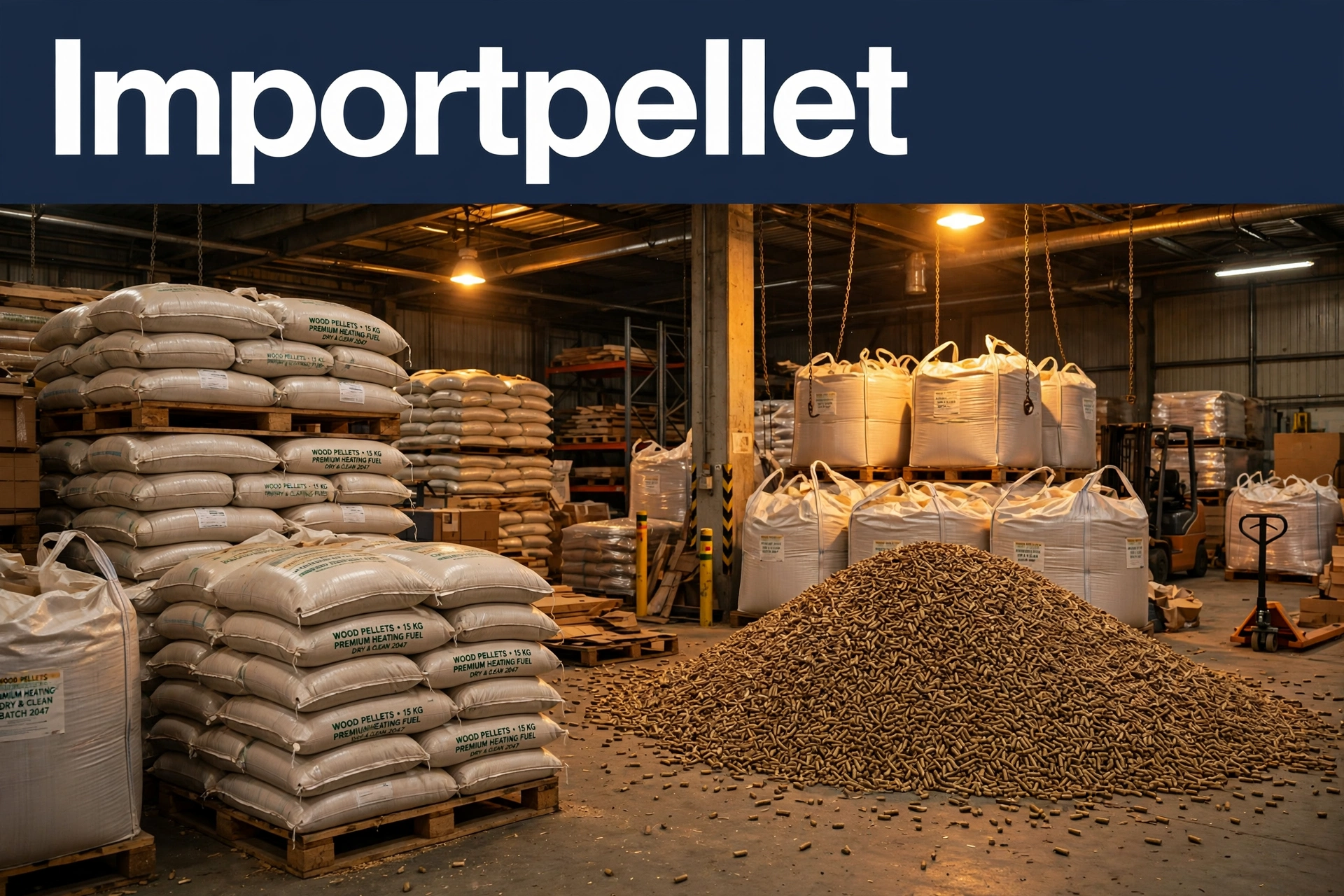
Importpellet is the process of bringing wood pellets into your country from an overseas supplier. In short, it means buying small, compressed cylinders of wood fuel from another country instead of from a local producer.
When people search for importpellet, they usually want a practical answer. They may run a heating business, manage a farm, or heat a home with a pellet stove, and they want to know how the trade works, what good pellets look like, and what can go wrong. This importpellet guide answers those questions in plain language. It is a general guide, not a supplier directory, and it promises no fixed price.
What Is Importpellet?
Importpellet simply means buying wood pellets across a border. Pellets are small, dense cylinders made by compressing sawdust and wood waste, and they are burned in stoves, boilers, and power plants. The pellet does not change at the border. What changes is everything around it: paperwork, shipping, quality checks, and cost.
The name importpellet is used in more than one place, so it helps to separate the uses. In the wood fuel trade, it describes the general process of importing pellets, and it is also the name used by Mello Commodity for its guidance on importing wood pellets from Brazil. A separate website called importpellet.it.com is a guest posting platform, not a pellet supplier, and it should not be confused with the fuel trade. This article is about the fuel trade.
Why Are Wood Pellets Imported?
The main reason is demand: as countries move from fossil fuels, more homes and plants burn pellets, and local supply does not always keep up. A study of FAO data found that global pellet imports grew from 8.76 million tonnes in 2012 to 22.15 million tonnes in 2018, and the trend has continued since. Germany imported nearly 600,000 tonnes in 2025, its highest level since records began in 2009, and Italy brought in about 1.91 million tonnes the same year, according to Holzkurier. That growth is why importpellet has become a routine part of the fuel trade.
A heating company may need steady volume through winter, a retailer may need bagged pellets for stove owners, and an industrial plant may need bulk fuel for a boiler. In each case, importpellet reaches producers in countries with large forests and lower wood costs.
What Types of Pellets Can You Import?
Not every pellet is the same. Picking the right type before talking to a supplier saves money and trouble. The three grading systems that matter most are ENplus in Europe, PFI in North America, and ISO 17225-2 internationally.
ENplus grades home pellets as A1, the premium grade with the lowest ash, A2, which allows slightly more ash, and B, which is for industrial use. PFI grades are Premium, Standard, and Utility, based mainly on ash content. ISO 17225-2 covers industrial grades I1 through I3, often paired with sustainable biomass certification. A pellet certified for a power plant is not automatically safe for a living room stove, because industrial grades tolerate more ash and variation.
Which Grade Fits Which Buyer?
A homeowner with a small stove needs a premium residential grade, usually ENplus A1 or PFI Premium. A larger commercial boiler can use A2 or Standard. A power plant buys industrial grade in bulk, where the price per tonne matters more than a clean burn. Matching the grade to the appliance is the first quality decision in any importpellet order. Whatever the grade, importpellet only works when the grade matches the appliance.
What Quality Checks Matter Before You Buy?
Quality is where importers lose money. The most trusted benchmark is ENplus, a certification scheme based on ISO 17225-2. Ask every supplier for a valid ENplus ID and a recent lab test report, and check that the ID is real before paying anything.
The numbers that matter are moisture, ash, calorific value, and durability. For ENplus A1: moisture 10 percent or less, ash 0.7 percent or less, calorific value 16.5 to 19 megajoules per kilogram, durability at least 97.5 percent. Low durability means pellets crumble into dust, and high moisture means weak heat and more smoke. A lab report tells a buyer more than any sales claim. That is why every importpellet buyer should read the lab report before paying.
What Documents Does Customs Need?
Missing papers cause most customs delays, so the documents should be ready before the cargo leaves port. For most wood pellet shipments, customs authorities use HS code 4401.31, but the exact code should always be confirmed with the local customs office, because national tariff lines can differ after the first six digits.
The importpellet checklist includes an invoice and sales contract, packing list, bill of lading, certificate of origin, phytosanitary certificate, fumigation certificate if needed, quality certificate or lab report, and an import licence where required. Rules change by country, so check with a customs broker before placing an order.
What Does Importpellet Cost, and Where Do Buyers Lose Money?
There is no single price for imported pellets, and any article that prints a fixed price without a date and a supplier quote is already out of date. The landed cost is the real number: the pellet price plus freight, insurance, port charges, storage, and currency movement. Zero customs duty does not mean zero cost, because freight, storage, rejected loads, and exchange rate swings are where margins disappear.
A careful buyer gets a written quote, a sample, and a lab report before committing to a shipment, and treats any deal that looks too easy as a reason to check harder, not to pay faster.
At a Glance
| Detail | What to know |
|---|---|
| Meaning | Buying wood pellets from another country |
| Main use | Heating homes, farms, shops, and power plants |
| Top home grade | ENplus A1 or PFI Premium |
| Industrial grades | ENplus B, ISO 17225-2 I1 to I3 |
| Key quality limits (A1) | Moisture 10% or less, ash 0.7% or less, durability 97.5% or more |
| Customs code | HS 4401.31 for most wood pellet shipments |
| Essential documents | Invoice, packing list, bill of lading, certificate of origin, phytosanitary certificate, lab report |
| Biggest cost risks | Freight, storage, currency swings, rejected loads |
| First check | Valid ENplus ID plus a recent lab test report |
Frequently Asked Questions
What does importpellet mean?
It means buying wood pellets from a supplier in another country and bringing them across the border, including the shipping, customs, and quality checks involved.
Which pellets are best for a home stove?
A premium residential grade is best, usually ENplus A1 or PFI Premium, because it has the lowest ash and the cleanest burn.
What is the HS code for wood pellets?
Most customs authorities use HS code 4401.31 for wood pellet shipments, but the exact code should be confirmed with the local customs office.
How can I check a pellet supplier?
Ask for a valid ENplus ID and a recent lab test report showing moisture, ash, calorific value, and durability, and verify the certificate before paying.
Why do pellet imports keep growing?
Demand has grown as countries shift from fossil fuels to cleaner energy, and global pellet imports rose from 8.76 million tonnes in 2012 to 22.15 million tonnes in 2018.
Is importpellet.it.com a pellet supplier?
No. It is a guest posting platform with a similar name, and it is not the same as the wood pellet trade or a pellet supplier.
Conclusion
In short, importpellet moves a simple fuel across borders, while the trade around it is not simple. The grade, the lab report, the documents, and the landed cost decide whether an import saves money or becomes a headache.
For readers, the lesson of importpellet is to check before paying: match the grade, read the lab report, prepare the documents, and get the landed cost in writing. A buyer who does those four things will know far more than one who only compares prices.
That is why importpellet rewards patience more than speed, and importpellet shows how a small cylinder of compressed sawdust can carry a whole chain of trade, trust, and testing behind it. Done well, importpellet keeps homes warm and plants running all winter.
Related Reading: Transjoaimo: A Small Brazilian Carrier With a Big Road Story




One thought on “Importpellet: How Wood Pellets Cross Borders to Heat Homes”