









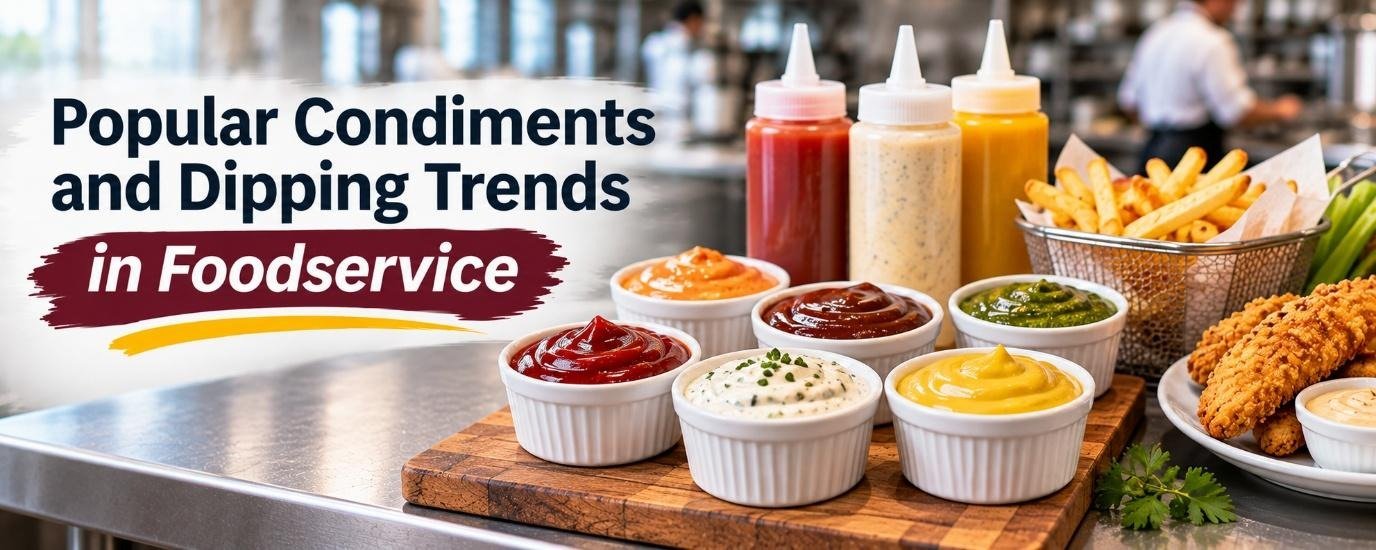
A great sauce can change an entire dish.
French fries become loaded fries with the right dip. A basic chicken sandwich can take on a completely different personality with spicy mayo. Wings can move from smoky barbecue to sweet heat, buffalo or globally inspired flavours simply by changing the sauce.
For restaurants and other Canadian foodservice operators, condiments and dipping sauces offer something particularly valuable: the ability to create flavour, customization and menu variety without necessarily developing an entirely new dish.
Canadian diners are also becoming more interested in taste, ingredients, customization and global flavours, according to Restaurants Canada’s Foodservice Facts 2026.
That makes sauces an interesting area for menu innovation.
From familiar ketchup and mayonnaise to chili crisp, hot honey, aioli and globally inspired sauces, here are some of the most important condiment and dipping trends in foodservice and how operators can use them strategically.
Why Condiments Matter in Foodservice
Condiments may represent a relatively small portion of the plate, but they can have an outsized influence on the eating experience.
A sauce can add:
- Heat
- Sweetness
- Acidity
- Creaminess
- Smoke
- Umami
- Texture
- Colour
More importantly, it can differentiate one menu item from another.
Imagine offering the same chicken tenders with four sauces:
Classic BBQ
Buffalo
Garlic Parmesan
Sweet Chili
The core product remains largely the same, but the customer experiences four different flavour options.
This makes sauces useful for operators looking to expand perceived menu variety while controlling kitchen complexity.
Canada’s Condiment Market Is Significant
Sauces and condiments are already an established part of Canadian food culture.
Agriculture and Agri-Food Canada reports that Canada accounted for approximately US$3.7 billion in retail sales of sauces, dips and condiments in 2024, making it one of the world’s larger markets for the category.
Canada also exported approximately C$800 million in sauces and condiments in 2024, with prepared sauces representing the largest share of those exports.
Although retail and foodservice markets are different, these figures demonstrate the scale and variety of Canada’s broader sauce and condiment category.
For restaurants, the opportunity lies in translating changing flavour preferences into dishes customers want to order.
1. Spicy Sauces Continue to Expand
Heat has moved well beyond conventional hot sauce.
Restaurants can now explore different types and intensities of spice through sauces such as:
- Sriracha
- Buffalo sauce
- Chili garlic sauce
- Jalapeño sauce
- Habanero sauce
- Peri-peri
- Gochujang-based sauces
- Harissa
- Sambal
- Chipotle sauce
- Chili crisp
Each produces a different flavour experience.
That distinction matters.
Customers interested in spicy food may not simply want maximum heat. They may be looking for smoky, tangy, garlicky, fermented or slightly sweet flavours alongside the spice.
Restaurants can therefore think about type of heat, not simply intensity.
2. Sweet Heat Is Creating New Possibilities
One of the most versatile flavour combinations in modern foodservice is sweet plus spicy.
Examples include:
- Hot honey
- Sweet chili sauce
- Mango habanero
- Spicy maple
- Honey sriracha
- Sweet-and-spicy barbecue
- Chili fruit sauces
The appeal comes from contrast.
Sweetness can soften the perception of heat while spice makes a sweet sauce feel more complex.
These sauces can work across:
- Fried chicken
- Wings
- Pizza
- Sandwiches
- Burgers
- Seafood
- Vegetables
- Breakfast dishes
Hot honey is particularly versatile because it can cross traditional menu categories.
A restaurant might use it on pizza at dinner and a breakfast sandwich the following morning.
3. Global Flavours Are Becoming More Important
Restaurants Canada’s Foodservice Facts 2026 identifies global flavours as one of the areas receiving increased attention from Canadian consumers.
Canada’s diverse population makes this particularly relevant.
Operators can explore sauces and condiments inspired by culinary traditions from around the world, including:
- Gochujang
- Harissa
- Chimichurri
- Tahini
- Tzatziki
- Peri-peri
- Teriyaki
- Hoisin
- Ponzu
- Sambal
- Curry sauces
- Chutneys
- Salsa verde
- Mole-inspired sauces
These ingredients should be treated with respect for their culinary origins.
Simply putting the word “Asian,” “Mediterranean” or “international” in front of a generic sauce does not create authenticity.
Operators should understand the ingredients, flavour profile and traditional applications of the condiment they are using.
4. Mayonnaise Is Becoming a Flavour Platform
Plain mayonnaise remains an important foodservice staple.
But mayonnaise can also serve as a base for numerous restaurant dipping sauces.
Examples include:
- Chipotle mayo
- Garlic mayo
- Sriracha mayo
- Herb mayo
- Truffle mayo
- Cajun mayo
- Curry mayo
- Lemon mayo
This can be operationally useful.
Rather than stocking numerous completely unrelated sauces, an operator may be able to use a core ingredient as the base for several variations.
That can simplify inventory while still creating flavour variety.
5. Aioli Adds Premium Positioning
Aioli has become familiar on restaurant menus, particularly with fries, sandwiches, seafood and appetizers.
Depending on the recipe, flavour variations can include:
- Garlic
- Lemon
- Herb
- Roasted pepper
- Chipotle
- Truffle
- Jalapeño
Operators should use culinary terminology accurately.
Traditional aioli has specific culinary roots, while many restaurant products described as aioli are essentially flavoured mayonnaise-based sauces.
Whatever terminology is used, the menu description should accurately reflect the product being served.
6. Ranch Remains Highly Versatile
Some trends come and go.
Others become staples.
Ranch-style dressing and dipping sauces remain highly adaptable because they can accompany:
- Wings
- Pizza
- Vegetables
- Chicken
- Fries
- Salads
- Sandwiches
Restaurants can also build flavour variations around the familiar base.
Examples include:
- Spicy ranch
- Jalapeño ranch
- Buffalo ranch
- Herb ranch
- Avocado ranch
Familiarity can be valuable.
Not every sauce on the menu needs to challenge the customer.
A strong condiment program can combine trusted favourites with more adventurous options.
7. Barbecue Sauce Continues to Evolve
BBQ sauce is another familiar category with considerable room for variation.
Restaurants might explore:
- Smoky barbecue
- Sweet barbecue
- Spicy barbecue
- Honey barbecue
- Mustard barbecue
- Bourbon-style barbecue
- Regional-inspired barbecue sauces
Barbecue flavours can work across proteins, sandwiches, burgers, wings and appetizers.
Instead of simply listing “BBQ sauce,” menu descriptions can explain what makes a particular version distinctive.
For example:
Smoky Chipotle BBQ
communicates more flavour information than:
BBQ Sauce
Clear descriptions help customers choose.
8. Mustard Is More Versatile Than It Looks
Mustard can provide acidity, heat and complexity without overwhelming a dish.
Foodservice varieties can include:
- Yellow mustard
- Dijon mustard
- Whole-grain mustard
- Honey mustard
- Hot mustard
- Beer-style mustard
It can work as:
- A sandwich condiment
- A dipping sauce
- A dressing ingredient
- A glaze component
- A sauce base
Agriculture and Agri-Food Canada’s international market analysis also continues to identify mustard as an important component of the broader sauce and condiment sector.
For operators, mustard’s versatility can make it useful beyond burgers and hot dogs.
9. Pickled and Fermented Flavours Add Acidity
Not every condiment needs to be creamy or sweet.
Acidity can provide contrast to rich foods.
Examples include:
- Pickled onions
- Relishes
- Pickled peppers
- Kimchi
- Sauerkraut
- Pickled cucumbers
- Giardiniera
These can complement:
- Burgers
- Sandwiches
- Tacos
- Fried foods
- Grain bowls
- Charcuterie-style offerings
Acidic ingredients can help balance rich, fatty or fried foods while adding texture.
Fermented products also introduce deeper and more complex flavours.
10. Chili Crisp Brings Heat and Texture
Chili crisp has gained attention because it delivers something many conventional sauces do not:
texture.
Oil, chili and crispy aromatics can add both heat and crunch.
Potential applications include:
- Eggs
- Noodles
- Rice
- Dumplings
- Pizza
- Sandwiches
- Vegetables
- Bowls
Restaurants considering chili crisp should pay attention to ingredients and allergens, since formulations can vary substantially.
The broader lesson is useful:
Customers may respond not only to flavour but also to texture in condiments.
11. Creamy Sauces Continue to Provide Comfort
While bold global flavours receive attention, familiar creamy sauces remain valuable.
Examples include:
- Cheese sauce
- Garlic sauce
- Ranch
- Caesar-style dressing
- Sour cream-based dips
- Blue cheese dressing
- Creamy pepper sauce
These flavours can provide comfort and familiarity alongside more experimental options.
A menu does not need to choose between classic and adventurous.
It can offer both.
12. Signature Sauces Can Differentiate the Restaurant
A burger can be copied.
A chicken sandwich can be copied.
French fries can be copied.
A distinctive signature sauce can be more difficult for competitors to replicate exactly.
That makes sauces useful for brand identity.
Restaurants can create a house sauce around:
- Heat
- Smoke
- Herbs
- Garlic
- Sweetness
- Acidity
- Creaminess
The sauce can then appear across several dishes.
For example:
House Spicy Sauce
might work with:
- Burgers
- Fries
- Chicken
- Sandwiches
- Appetizers
This creates a recognizable flavour associated with the restaurant.
13. Dipping Flights Can Turn Sauce Into an Experience
Instead of treating sauce as something automatically placed beside the meal, restaurants can make it part of the experience.
A dipping flight might include:
Classic
Spicy
Sweet
Global-inspired
For example:
Garlic Aioli + Chipotle BBQ + Hot Honey + Herb Ranch
Customers can compare flavours and customize each bite.
This format can work particularly well with:
- Fries
- Chicken tenders
- Wings
- Mozzarella sticks
- Fried vegetables
- Flatbreads
- Shareable appetizers
Operators should calculate the additional sauce and serving costs before introducing unlimited options.
14. Customization Is Becoming More Important
Restaurants Canada reports that customization is increasingly part of how Canadian consumers think about quality and the restaurant experience.
Sauces offer a relatively straightforward way to provide that choice.
Instead of modifying an entire recipe, a customer might simply choose:
- Mild
- Medium
- Hot
- Creamy
- Smoky
- Sweet
- Tangy
This can create a sense of personalization without requiring the kitchen to build completely different dishes.
The key is keeping the system manageable.
Twenty dipping choices may create more operational problems than value.
A carefully selected range is usually easier for customers and staff.
15. Sauces Can Create Add-On Revenue
Extra sauce does not always need to be free.
Premium or additional dipping sauces can potentially become paid add-ons when the value is clear to the customer.
For example:
Extra Signature Dip — $1
If the direct portion cost is $0.30:
$1.00 − $0.30 = $0.70 contribution before other operating costs
If 100 customers purchase one each day:
$0.70 × 100 = $70 daily contribution
Across 300 operating days:
$21,000
This is a simplified illustration, not guaranteed profit. Labour, packaging, waste and other costs still need to be considered.
But it demonstrates why portioned sauce can deserve the same menu-engineering attention as larger dishes.
16. Portion Control Matters
Sauces can quietly increase food costs when portions are inconsistent.
One employee might serve 30 millilitres.
Another might serve 60.
If thousands of orders are involved, that variation becomes meaningful.
Use appropriate portion-control methods such as:
- Pumps
- Ladles
- Squeeze bottles
- Portion cups
- Measured recipes
Standardization protects margins and gives customers a more consistent experience.
17. Don’t Ignore Takeout and Delivery
Dipping sauces can become even more important when customers order food off-premises.
Customers expect the correct sauces to arrive with the meal.
Missing sauce can negatively affect an otherwise successful order.
For takeout and delivery, operators should consider:
- Leak-resistant containers
- Accurate order assembly
- Clear labels where necessary
- Portion size
- Packaging cost
- Temperature requirements
A premium sauce has little value if it leaks throughout the delivery bag.
Packaging is part of the product experience.
18. Use Sauces to Refresh Existing Menu Items
Restaurants do not always need a completely new entrée to create menu excitement.
Changing the sauce can refresh an existing product.
A standard chicken sandwich might become:
Hot Honey Chicken Sandwich
then later:
Smoky Chipotle Chicken Sandwich
or:
Korean-Inspired Gochujang Chicken Sandwich
The core protein and much of the operational process may remain similar.
This can make sauces useful for:
- Limited-time offers
- Seasonal menus
- Promotional items
- Flavour testing
Operators can test customer interest before committing to a permanent menu change.
19. Consider Cross-Utilization
A sauce becomes operationally more useful when it works across several dishes.
Suppose a restaurant introduces a chipotle sauce for one low-volume appetizer.
If it has no other application, inventory may move slowly.
But if the same sauce works on:
- Burgers
- Tacos
- Fries
- Chicken
- Sandwiches
the product may turn faster.
Cross-utilization can help simplify purchasing and reduce the risk of excess inventory.
However, avoid putting the same sauce everywhere simply to use it up.
Customers still expect variety.
20. Global Flavour Should Be More Than a Label
Canada’s multicultural food culture provides enormous inspiration for condiment innovation.
But authenticity matters.
If a menu uses terms such as:
Gochujang
Harissa
Chimichurri
Tzatziki
Tahini
Peri-peri
customers may have expectations about the flavour.
Restaurants should research ingredients and culinary traditions carefully.
When possible, work with chefs, suppliers or culinary professionals who understand the cuisine.
E-E-A-T applies to menu development too.
Expertise improves authenticity.
21. Plant-Based Sauces Can Expand Menu Flexibility
Sauces can also help restaurants develop more appealing plant-based dishes.
Options may include:
- Tahini sauces
- Salsa
- Chimichurri
- Tomato-based sauces
- Plant-based mayonnaise
- Hummus
- Chili sauces
- Herb sauces
A flavourful sauce can make vegetables, grains, legumes and plant-based proteins substantially more interesting.
But operators should verify ingredient information carefully.
A sauce that appears plant-based may contain dairy, eggs, fish ingredients or other animal-derived components.
Never rely on assumptions.
22. Allergen Awareness Is Essential
Condiments can contain priority allergens.
Depending on the formulation, sauces may include:
- Egg
- Milk
- Soy
- Wheat
- Sesame
- Peanuts
- Tree nuts
- Mustard
- Fish
- Crustaceans or molluscs
This is particularly important with global sauces, creamy dressings and blended condiments.
Staff should have access to accurate ingredient information.
If a customer asks about an allergy, employees should verify rather than guess.
23. Familiar Flavours Still Matter
Trend discussions can make it sound as though ketchup has disappeared and everyone is eating fermented chili sauce.
That is not reality.
Classic condiments remain important.
Customers continue to expect familiar choices such as:
- Ketchup
- Mayonnaise
- Mustard
- Ranch
- BBQ sauce
- Hot sauce
Innovation should generally complement these products rather than automatically replace them.
Think of the condiment menu in layers:
Core favourites
Signature sauces
Trend-driven options
This gives customers both comfort and discovery.
24. Value Matters to Canadian Diners
Foodservice innovation is happening in an environment where Canadian consumers remain highly sensitive to value.
Restaurants Canada’s 2026 research emphasizes affordability as a major factor influencing restaurant choice.
That means sauce innovation should improve perceived value rather than simply add another charge.
A $1 premium dipping sauce may work if customers see something distinctive in it.
Charging extra for a tiny portion of an ordinary condiment may create the opposite reaction.
Price according to customer value as well as cost.
25. Test Before Expanding
Not every viral sauce trend deserves a permanent place on the menu.
Start small.
A limited-time sauce can help measure:
Orders
Repeat purchases
Customer feedback
Food cost
Waste
Operational complexity
Add-on sales
Digital ordering systems can also provide useful data on which sauces customers select most often.
Let actual customer behaviour determine which products remain.
A Condiment Strategy Checklist
Before adding a new foodservice sauce or dip, ask:
Taste: Does it genuinely improve the dish?
Demand: Are customers likely to want it?
Fit: Does the flavour match our restaurant concept?
Cost: What does each portion cost?
Price: Can it support an add-on charge?
Versatility: Can we use it across several dishes?
Storage: Does it require refrigeration?
Shelf life: Will we use it before quality declines?
Labour: Does it require significant preparation?
Consistency: Can staff reproduce it reliably?
Allergens: Do we have accurate ingredient information?
Packaging: Will it work for takeout and delivery?
Differentiation: Does it give customers something memorable?
A sauce that performs well across several of these areas may provide more value than simply following the latest trend.
Small Sauces Can Create Big Menu Opportunities
Condiments occupy very little space on the plate, but they can play a surprisingly large role in foodservice.
They create flavour.
They allow customization.
They help operators refresh existing menu items.
They can introduce customers to global flavours.
They can turn familiar foods into limited-time offers.
And, when portioned and priced appropriately, premium sauces can create incremental revenue.
Canadian consumers are placing increasing importance on taste, ingredients, customization and global flavours, according to Restaurants Canada’s latest industry research. Meanwhile, Agriculture and Agri-Food Canada data shows that Canada already represents a multibillion-dollar market for sauces, dips and condiments.
For foodservice operators, the opportunity is not to chase every new sauce appearing on social media.
Keep the classics customers expect. Introduce global flavours thoughtfully. Test sweet heat and spicy options. Develop signature sauces where they strengthen your brand. Use dips to create customization and add-on opportunities. Standardize portions and measure what customers actually order.
The best condiment strategy is ultimately simple:
Use a small part of the plate to create a much bigger flavour experience.